ROVING PIANIST

WHO KNOWS WHERE HE WILL SHOW UP NEXT?

  • Home
    • Register
    • Log In
  • Concerts
    • Public concerts
    • Private Concerts
  • Quick Takes
  • Piano Blog
  • Other
  • Contact
  • About
    • About The Author
    • Privacy Policy
You are here: Home / Archives for Concerts

Virna Kljakovic at Lisinski Hall, Zagreb

Friday, March 24th, 2017 by Ken Turner

Virna Kljakovic at Lisinksi, Zagreb

Virna Kljakovic at Lisinksi Hall, Zagreb 2017

On March 20th, 2017, pianist Virna Kljakovic gave a recital at Lisinski Concert Hall (Lisinski Concertna Dvorana) in Zagreb as part of the Mladi u Lisinskom (Youth at Lisinski) program.

Lisinski was just a 5 minute walk from my hotel along Zagreb’s wide urban corridor Ulica Grada Vukovara. This was the fourth and last performance by young Croatian pianists that I would see on this trip.

Virna Kljakovic

I first saw pianist Virna Kljakovic (bio here) perform on YouTube. Her Chopin – Nocturne in F Minor, Op 55, No 1 video has over 250,000 views now. But my favorite was her Bach-Busoni Chaconne in D minor BWV 1004. When I learned that this work was the anchor for her Lisinski recital, and that she would close with Schubert’s divine B flat major Sonata, I started making plans. 4300 miles later, I was at the Vatroslav Lisinski Concert Hall.
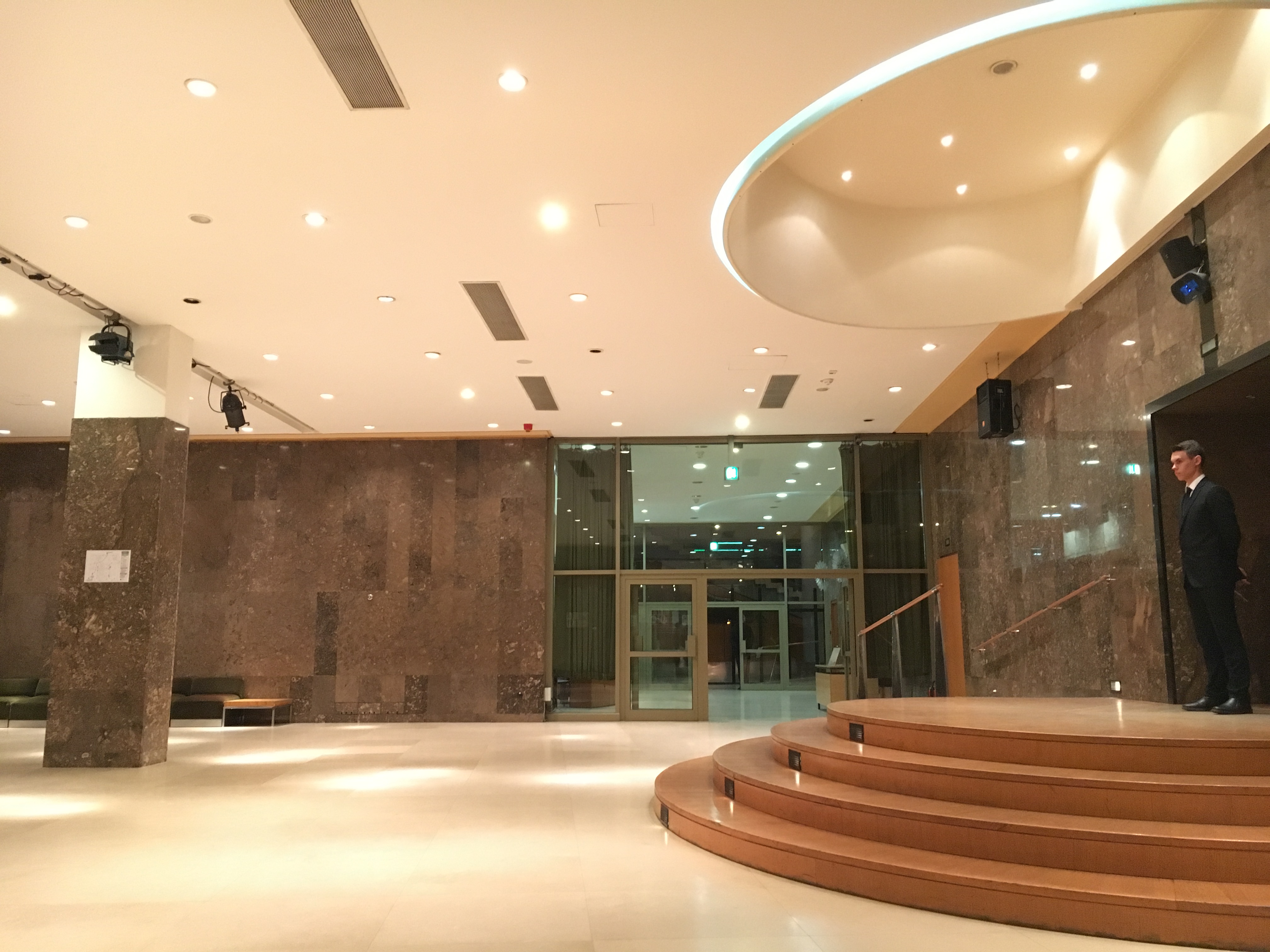
Lisinski Mala Dvorana entrance

Entrance to Mala Dvorana

Vatroslav Lisinski Concert Hall

Lisinski is Croatia’s national concert venue, comparable in standing to New York’s Carnegie Hall. The Mala Dvorana (Small Hall) at Lisinski is an intimate, modern performance space, somewhat larger than Carnegie Weill. The stage had a black backdrop, and the piano was a glistening black Steinway.

Bach – Busoni: Chaconne in D minor, BWV 1004
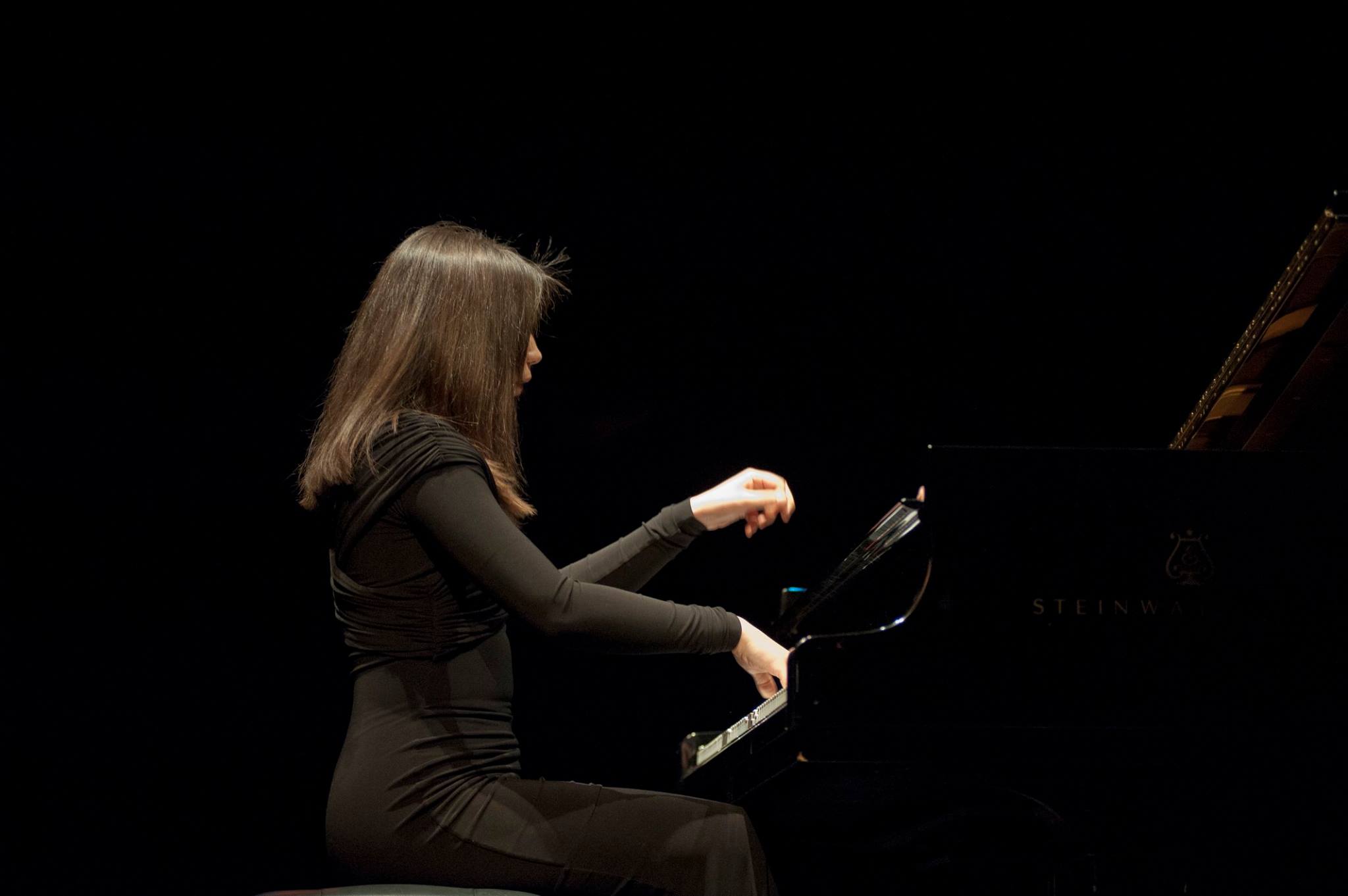
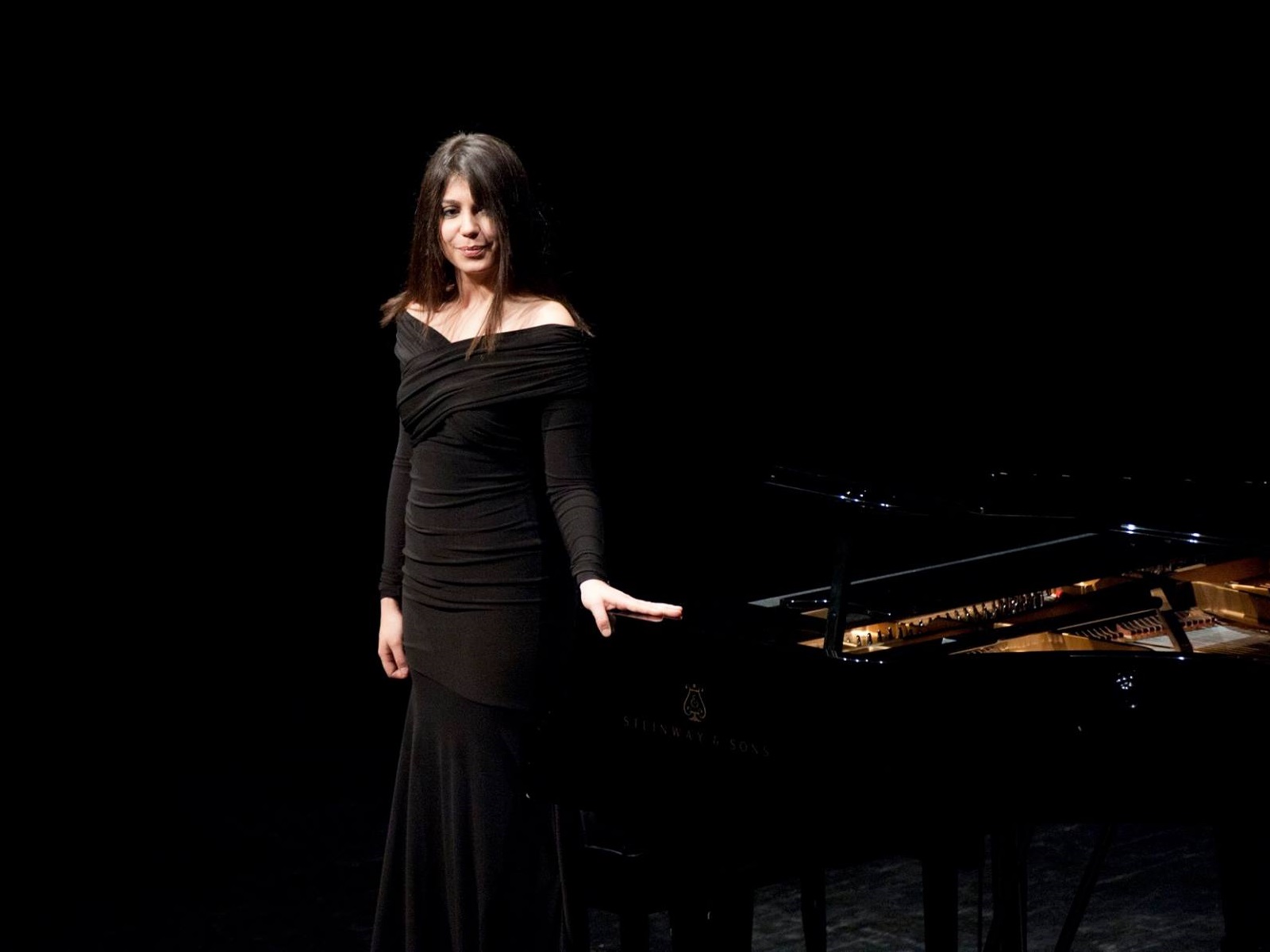
Virna Kljakovic performing at Lisinksi, Zagreb

Virna Kljakovic performing at Lisinksi Hall, March 2017

When the dark-haired Ms. Kljakovic entered wearing floor-length long-sleeved black clothing, the ambience was perfect for the somber grandeur of the D minor Chaconne.

This work is Busoni’s arrangement of the Chaconne from Bach’s 300-year-old Violin Partita No. 2 for solo violin. How do you make a piano sound like a violin? Well of course you don’t (even in an arrangement for one hand). Busoni’s dense harmonies make the piano sound more like an organ, and the arrangement is closer in spirit to Bach’s D minor Toccata and Fugue BWV 565.

Virna Kljakovic is a physically powerful pianist, well-suited to the demands of this work. Her opening progression was strong but never overweight, and her restrained pacing made the stately Chaconne ebb and flow like the tide. She seemed equally at home using her left hand like the feet of an organist, or both hands in delicate passages in the upper registers.

I struggle to explain how Ms. Kljakovic managed to paint a Chaconne that is more satisfying than, for example, Helene Grimaud‘s. Grimaud is more refined, but Kljakovic’s rapturous spirituality was compelling. Then there is Kissin. He has tremendous control, while Virna can blur more complex passages. But Kissin tinkers with tempo and over-interprets the finale, while Kljakovic closed with suitably direct and cataclysmic finality.

Franck: Prelude, Fugue and Variation in B minor, Op.18

Franck’s poignantly evocative piece was a welcome contrast to the weighty Chaconne. Ms. Kljakovic’s delivery was pleasantly lyrical, with adept pedal work that allowed Franck’s harmonics to glow continuously throughout the work.

Blagoje Bersa: Mélancolie, op. 76

Blagoje Bersa is a Croatian composer and national treasure. As played by Virna Kljakovic, Mélancolie is a 3-minute salon jewel that swells up in a cloud of harmonics and ebbs away with hints of Gershwin to a reflective close. At moments it resembled the preceding Franck variations. Pianists please take note: Mélancolie would make an excellent encore.

Schubert: Piano Sonata in B Flat Major, D. 960

This famous Sonata opens with a widely-loved melody that sends shivers through this reviewer. For the pianist, every note and nuance must be perfect in order to maintain the spell. Virna Kljakovic had the opening mastered, allowing her to be at her most expressive. I admire how she risked holding back longer at key moments, to great effect.

In the second movement (Andante Sostenuto) the pianist’s affinity for dramatic repertoire was evident. The performance was consummate Kljakovic, sonorous, reflective, and at times painfully beautiful.

The Scherzo was uneven, but the dancing bass of the Trio had clarity and punch. The closing Allegro, at times sounding like Beethoven, was delivered with engaging rubato and playful vigor. I had the distinct impression that the pianist was enjoying herself.

Authenticity
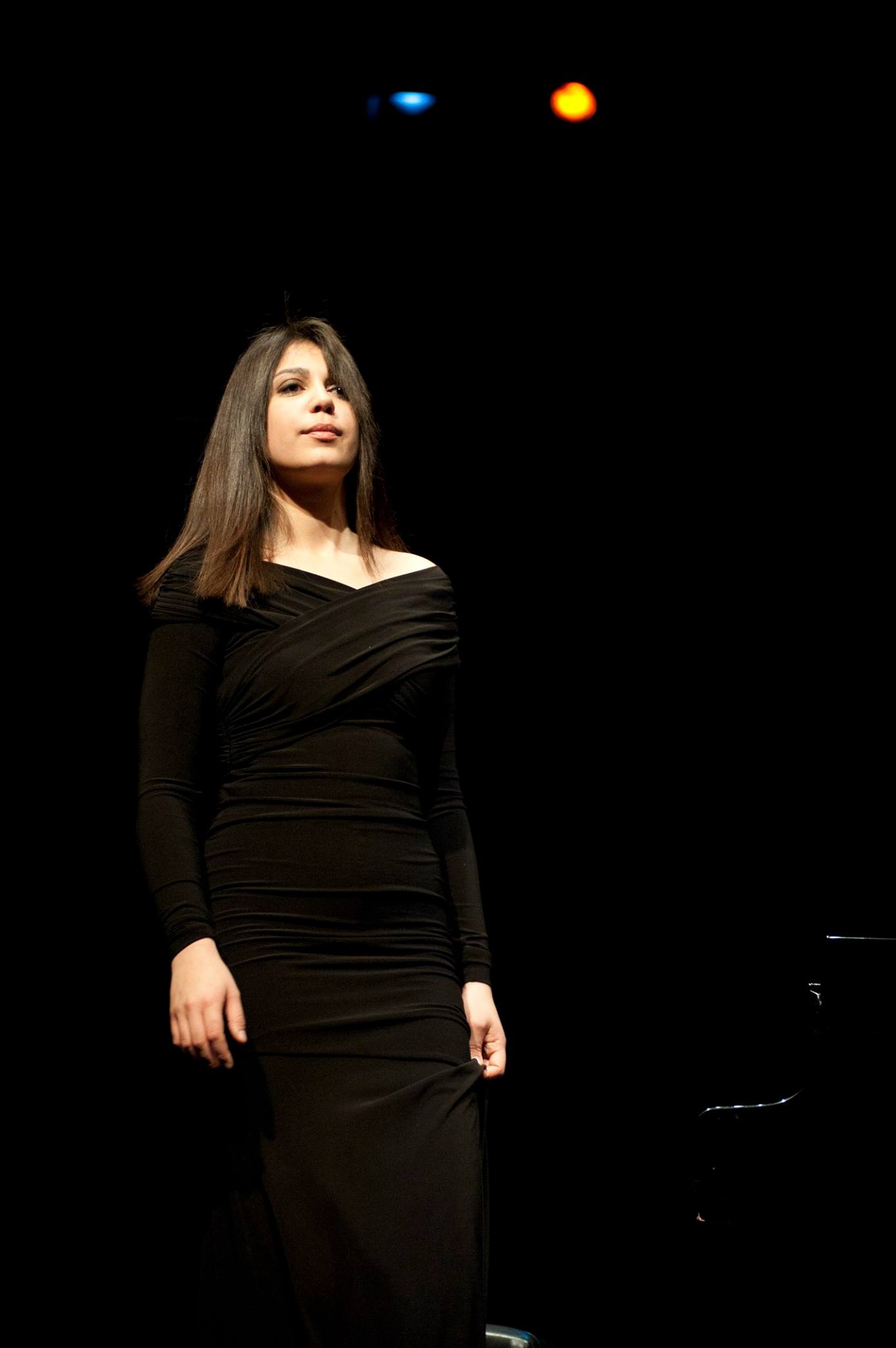
In live performances, we expect more from the pianist than can be captured as audio. From the showmanship of Lang Lang to the gravity of Kissin, top artists use every available modality.

Kljakovic’s grace at the keyboard is noted by her YouTube followers, and was evident at Lisinski. I see similar expressiveness of hand and arm in other pianists from the Zagreb Academy of Music. Somebody there is doing a very good job.

There was no bravado or artifice in Virna Kljakovic’s delivery. Every aspect of her performance was focused on authentic musical expression. When transported, she would tilt her head back and sing inaudibly. The last pianist I saw become so lost in her art was Khatia Buniatishvili, and the audience loved her for it.

Virna Kljakovic’s audience loved her too. She took three rowdy curtain calls and on the last, gave the longest bow I have ever seen from a pianist. It was an unforgettable “thank you” from a unique young artist to her supporters.
 

Filed Under: Concerts, Favorites, Public concerts Tagged With: Bach, Blagoje Bersa, Chaconne, Croatia, Franck, Lisinki Hall, Lisinski Concertna Dvorana, Mladi u Lisinskom, pianist, review, Schubert, Vatroslav Lisinski, Virna Kljakovic, Zagreb, Zagreb Academy of Music

Pianist Michael Bulychev-Okser at Central Park West

Sunday, December 18th, 2016 by Ken Turner

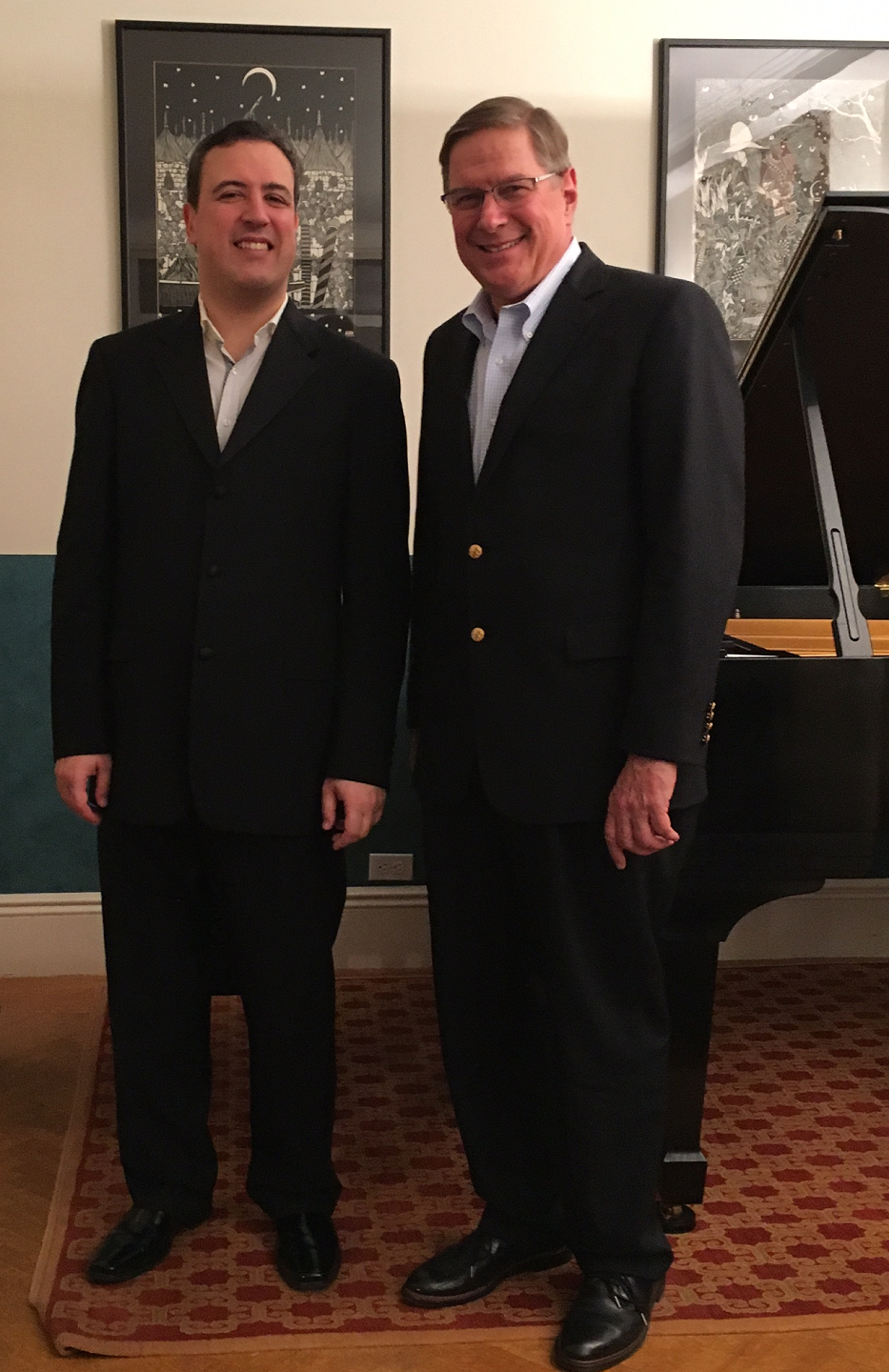
Michael Bulychev-Okser with host Robin Shoemaker

Michael Bulychev-Okser with host Robin Shoemaker

I first saw Michael Bulychev-Okser while I was meeting other guests in the foyer of Mr. Shoemaker’s home at Central Park West. While many pianists seclude themselves backstage prior to performing, our pianist for this December evening stood nearby, friendly and engaged.

This was a good sign. At Mr. Shoemaker’s salon concerts there is no stage to elevate the pianist, and no stage lighting to isolate the performer. The pianist and the audience inhabit the same space, and Bulychev-Okser appeared ready to make the most of this.

Michael Bulychev-Okser

Bulychev-Okser is an enterprising and accomplished pianist and composer who began his studies in Russia and now lives in the United States. You can find his extensive bio on the web site of the Gershwin International Music Competition, which he founded and directs. He also founded the Alion Baltic International Music Festival.

Low-key Style

Mr. Bulychev-Okser’s low-key style made it easy for him to connect with his audience, despite his imposing résumé. He introduced each work to us, sometimes with humorous anecdotes, before playing it. At the keyboard, he did not indulge in theatrical gestures or other artifice to tell his audience how to feel: he just played his heart out for us.

The Program

The program was heavily weighted toward piano arrangements. Here is the detail, with links to representative YouTube videos.

  • Von Bulow, arr. Liszt – Dante “Tanto gentile e tanto onesta” S. 479
  • Glinka, arr. Balakirev – The Lark (Olga Scheps)
  • Brahms, arr. Schutt- Lullaby (Bulychev-Okser)
  • Arensky, arr. Siloti – By the Fountain (Zeynelova)
  • Alabyev, arr. Liszt – The Nightingale (Bulychev-Okser)
  • Kreisler, Arr. Rachmaninov – Liebeslied (Rachmaninov!)
  • Rachmaninov – Etudes-Tableaux, Op. 33, No. 2 in C Major, No. 5 in D Minor
  • Bulychev-Okser – Hermes and Satire – Jazz Fantasy
  • Gershwin, arr. Wilde – The Man I love & Somebody Loves Me
  • Gershwin – Rhapsody in Blue Potpourri

Russian

The repertoire was substantially Russian, from Balakirev/Glinka thru Arensky, Alabyev and Rachmaninov. And Bulychev-Okser himself came across as a seriously Russian pianist. No surprise there, given his Moscow Conservatory roots.

But if Bulychev-Oksner had not spoken to us in his melodic Russian accent, would his performance have felt so Russian? Was I deluding myself into perceiving the authenticity of Glinka/Balakirev’s plaintive Lark, Rachmaninov’s soulfulness, or the balalaika-like dance that breaks out around 2 minutes into The Nightingale? I don’t think so!

I’m used to softer versions of The Nightingale, but I loved how Bulychev-Okser threw himself into this piece. He made the floor shake and our ears ring. You don’t often see a world-class pianist stomping the sustain pedal as if he were wearing Cossack boots. In a less intimate performance space, everyone would have cheered.

American

It was harder for me to relate to the concluding elements of the program, including Bulychev-Okser’s own composition, because I don’t understand jazz. However I enjoy Gershwin, and looked forward to the Rhapsody in Blue Potpourri. Unfortunately the original work (here) outshines any substitute. So I was a little underwhelmed, through no fault of the pianist.

An Evening of Contrasts

The piano sang when Bulychev-Okser played Russian repertoire. When his program shifted from Russian to American it was more in keeping with his adopted country’s culture, but less compelling. While America is also my adopted country, I personally preferred Bulychev-Okser’s Russian material. Finally, I don’t think that anyone who attended will forget his floor-shaking Nightingale.


Filed Under: Concerts, Private Concerts Tagged With: Alabyev, Alion Baltic International Music Festival, Arensky, Central Park West, Gershwin, Gershwin International Music Competition, Michael Bulychev-Okser, Rhapsody in Blue, Robin Shoemaker, Russian, salon concert, The Nightingale

Khatia Buniatishvili enchants Carnegie, 2016

Saturday, December 10th, 2016 by Ken Turner

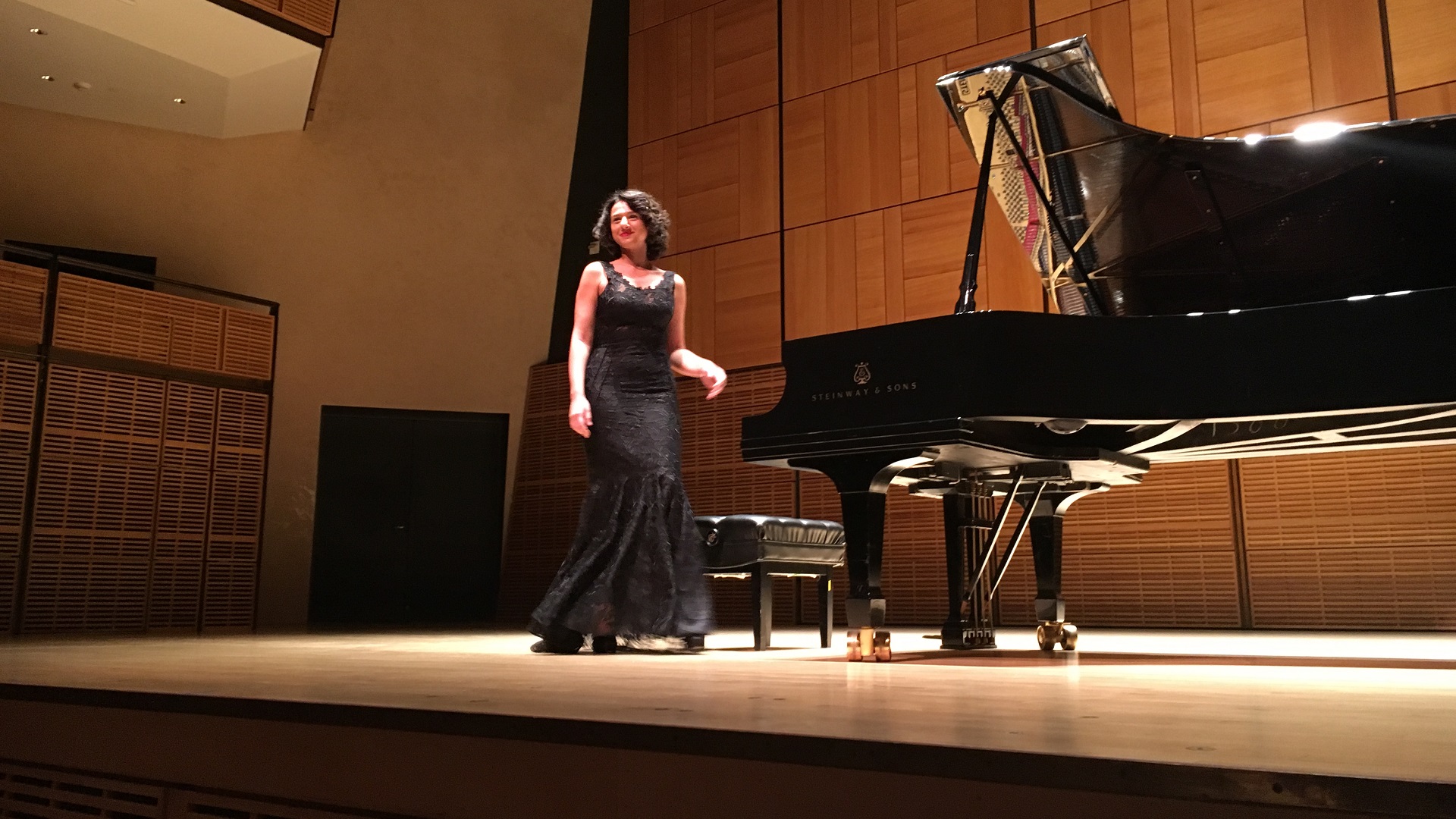
Khatia Buniatishvili Carnegie 2016-12-10

Khatia Buniatishvili Carnegie 2016-12-10

On Saturday December 10th, 2016, my wife Patti and I went into New York early to stop in at Europa Cafe (205 W 57th St., recommended) before Khatia Buniatishvili’s recital at Carnegie Zankel.

The program

The repertoire for this recital was distinguished by its grandeur and virtuosity, consisting only of Mussorgsky and Liszt. It was a program of sheer audience indulgence, performed by the strikingly beautiful pianist from the Republic of Georgia.

Khatia Buniatishvili

Khatia Buniatishvili is one of the finest younger pianists that I have discovered through YouTube. Her Vernier rendition of Chopin’s E minor Prelude (Op.28 No. 4), a slow cataclysm wrapped in angel cake, is a standout performance that made her a must-see when it came time to choose a Carnegie subscription for 2016.

For Carnegie, Khatia wore a charcoal evening gown and matte black heels. She walked with grace and had a warm, embracing smile. Her stately carriage continued when she sat. I don’t think I have seen a performer with a straighter back at the piano than Ms. Buniatishvili. It felt to me like we were in the presence of musical royalty.

Mussorgsky’s Pictures at an Exhibition

This piece is best known in Ravel’s orchestration, and some find the original piano score to be ponderous. But under Ms. Buniatishvili’s hands this evening, the Russkaya Dusha of Mussorgsky came through in a way that Ravel’s orchestration does not capture.

From the opening, the pianist used just the right amount of rubato to keep alive phrases that can easily become leaden. Her extensive use of una corda and rapid half-pedal on the sustain (wonderful what you can learn when you are up close) made the more reflective segments glow like the black Steinway did under the Zankel stage lighting.

On the stronger sections the pianist did everything well, but the Carnegie Steinway seemed brassy at the lower end. This had me wondering if we would have been better off with the rounder bass of a Yamaha. But perhaps it was just the acoustics.

Liszt: La Campanella, Hungarian Rhapsody No. 2

There were four Liszt items on the program, and with each one Ms. Buniatishvili got closer to perfection. I will discuss only the last two: La Campanella and the Hungarian Rhapsody No. 2.

Khatia’s La Campanella was a treat. That said, the top notes seemed too loud compared with the rest of the right hand, which is not the case in her recordings. But I was just 12 feet from the right side of the keyboard, which may have contributed to this.

Liszt’s Hungarian Rhapsody No. 2 was, for both my wife and myself, the peak of the evening. It is an exciting virtuoso piece, and was carried off with such vigor and natural feel that it was a perfect conclusion to the program. Here is a link to Khatia’s 2015 Verbier performance, but I thought that her 2016 Carnegie Zankel performance was even better.

Oh, Khatia!

If Ms. Buniatishvili’s entrance to Zankel Hall was stately, her departure was also gracious. She preferred a simple pianist bow, sometimes with left hand on the piano, and she made a point of looking to all the audience, including upstairs and to each side. She also made direct eye contact with me in the front row, which just about blew me out of my chair.

No review of Ms. Buniatishvili would be complete without mentioning her hair. Whenever Khatia plays you will see those ragged curls fall over her eyes. Since her eyes are more often than not closed, this has no effect on her performance. We see that the performer is lost in her art, and we love her all the more for that.

What was that encore?

Khatia’s encore was delightful and familiar but other than recognizing it as Bach, I could not name it. Waiting in line after the concert to meet the artist, I conferred with my neighbors but none of us were sure. I later learned that we know it as “Sheep may safely graze”, from Bach’s Cantata BWV 208. Listen to it in the following video from an earlier Paris performance, where she appears to be wearing the same dress that she wore for Carnegie.

[wpdevart_youtube]u8PRPtuTUlQ[/wpdevart_youtube]


My piano is your piano

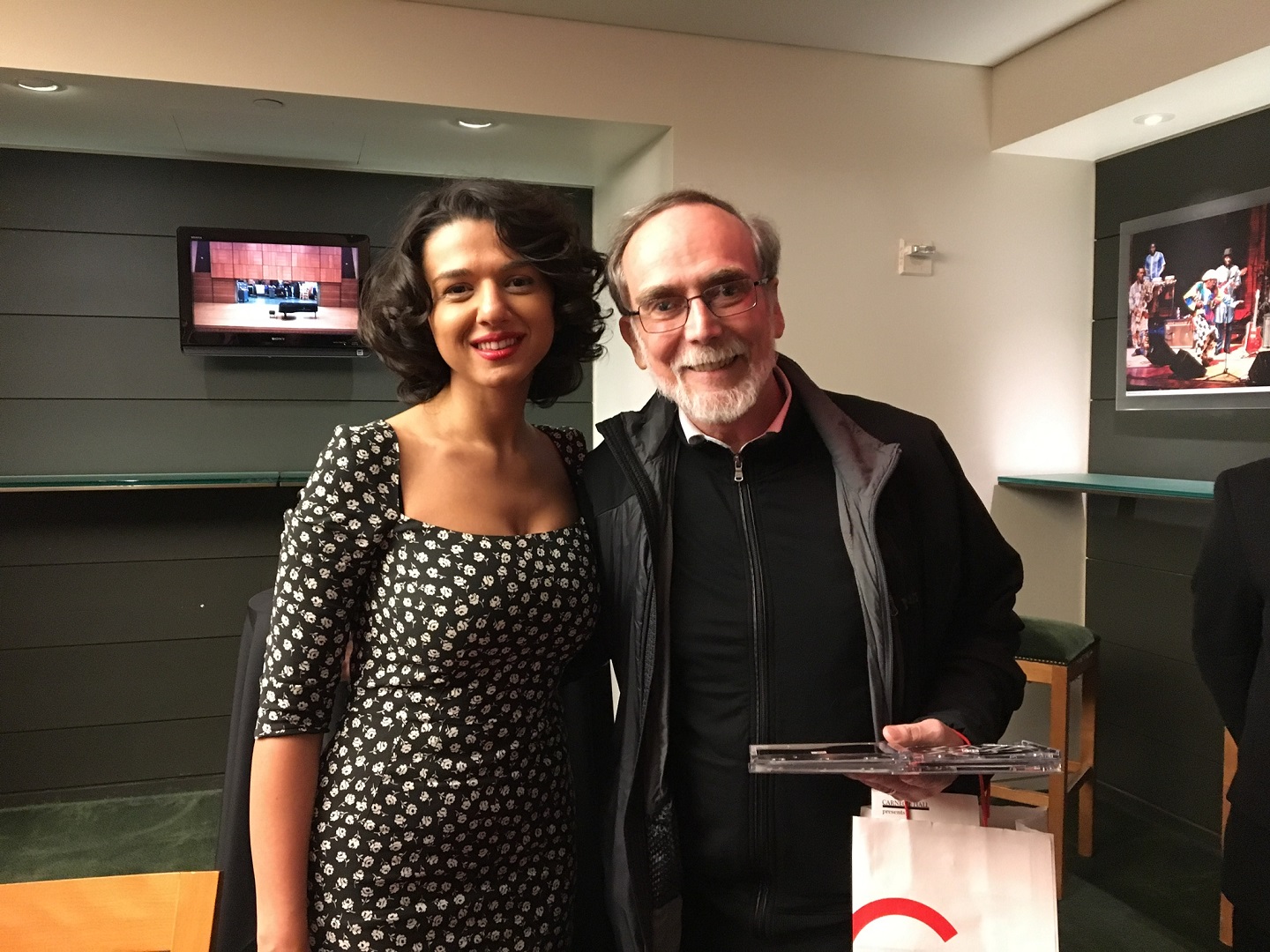
Khatia Buniatishvili and Ken Turner

Khatia Buniatishvili and the Author at Carnegie

Whenever I go to Carnegie I hope to meet the performer, but this is the first time I succeeded. Newly purchased CD’s in hand to be autographed, I had no coherent way to express what I was feeling! But I am sure that Ms. Buniatishvili is used to goofy grins from people who find themselves in the presence of unique talent and are just happy to be there.

My piano is your piano, Khatia.

Filed Under: Concerts, Public concerts Tagged With: Carnegie Hall, Khatia Buniatishvili, Liszt, Mussorgsky, pianist, piano, review

« Previous Page
Next Page »

©2025 Ken Turner | Roving Pianist


Loading Comments...
 

You must be logged in to post a comment.