ROVING PIANIST

WHO KNOWS WHERE HE WILL SHOW UP NEXT?

  • Home
    • Register
    • Log In
  • Concerts
    • Public concerts
    • Private Concerts
  • Quick Takes
  • Piano Blog
  • Other
  • Contact
  • About
    • About The Author
    • Privacy Policy
You are here: Home / Archives for Concerts / Public concerts

Pianist Tiffany Poon in Rhode Island

Wednesday, April 24th, 2019 by Ken Turner

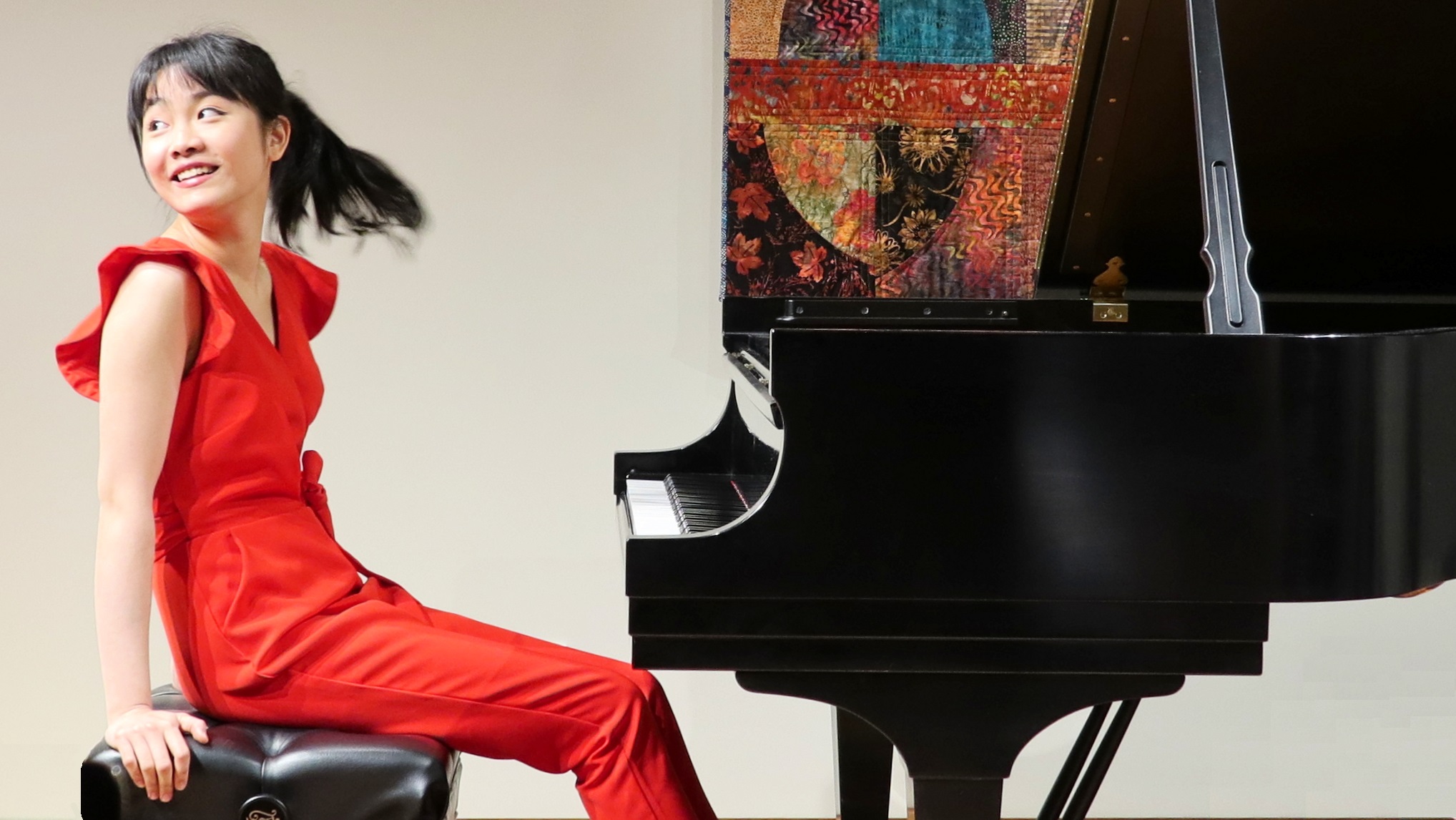
Tiffany Poon at her Core Memory recital Rhode Island 2019

Tiffany Poon is one of the first classical pianists to vlog about her life as a pianist.

She is an engaging communicator and works hard to expand her following; see my article Pianist Tiffany Poon meets Fans in NYC.

The resulting fan engagement has accelerated Tiffany’s social media presence to critical mass, bringing her invitations to perform around the world. With almost 110k YouTube followers at the time of writing, Tiffany’s concerts have sold out in places as diverse as Singapore and Brazil.

Given her popularity, I was lucky to get a seat at Tiffany’s very first house concert on April 20th 2019, hosted by Craig Maynard’s Core Memory venture in Rhode Island. Although 180 miles from my home, this was nothing compared with the distance some people traveled for this concert.

OMG it’s Tiffany!

When Tiffany walked through the audience to the piano, everyone went a little crazy. She was exactly the same in person as in her vlogs, except that instead of her usual low-key attire, she wore a dazzling scarlet outfit and golden heels. I felt like we were watching the birth of a star.

Bach: French Suite No. 5, BWV 816
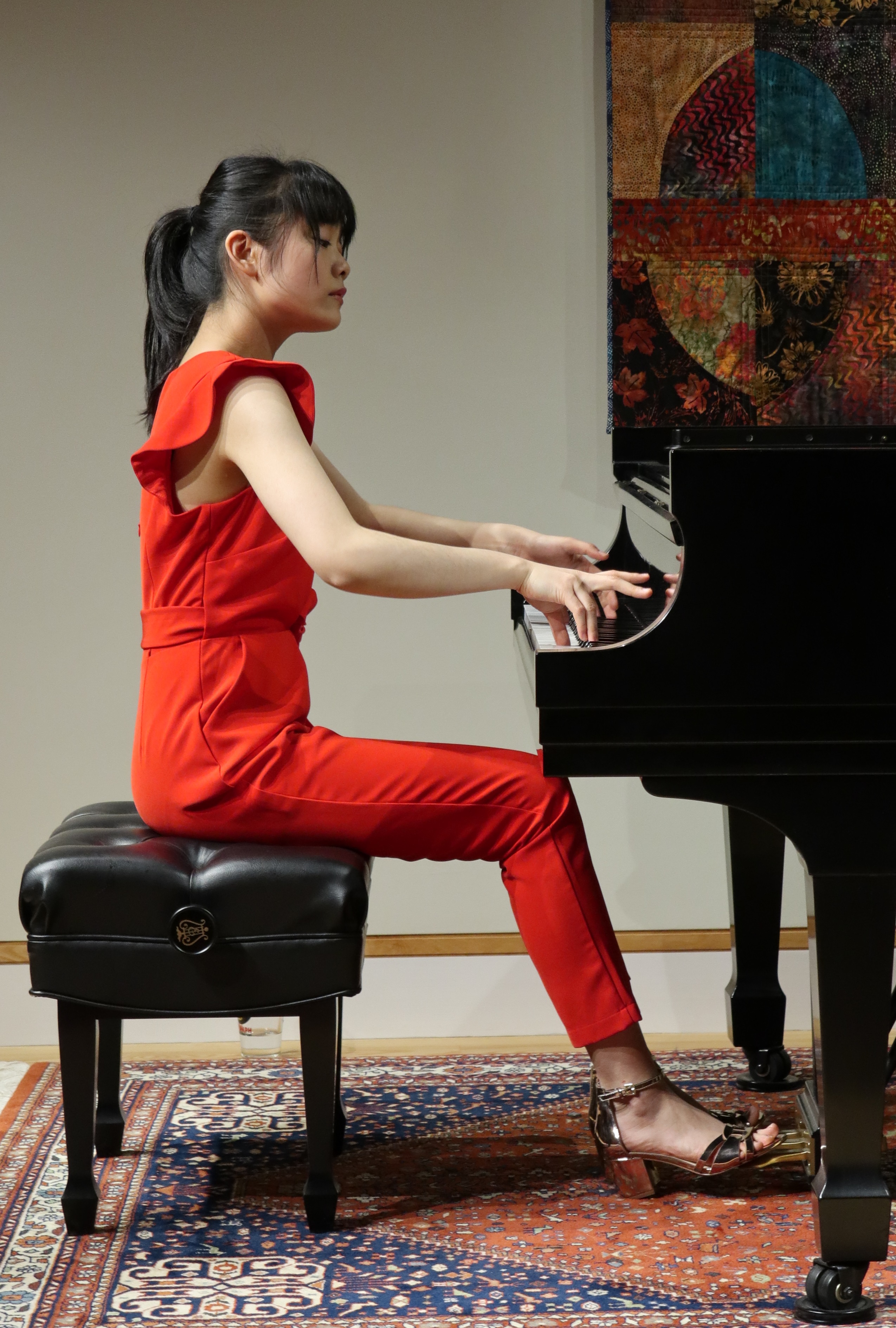
Tiffany Poon at Core Memory Rhode Island

Tiffany in action

Tiffany’s Bach was a sublime ice-breaker, sweetly colored by subtle, sometimes rapid pedal. Her voicing was fluid, using finely controlled dynamics to weave the left hand to the front and back of the sound stage. I’ve heard crisper baroque ornamentation, but I prefer Tiffany’s warmer, less clinical interpretation.

Haydn: Keyboard Sonata in E Flat Major, Hob. XVI:52

This work (Haydn’s last) is a kaleidoscope of contrasts which gave Tiffany lots to work with. She brought out the essence of this spirited, alternately grand and cheeky work, earning rousing applause from her audience.

Chopin: Barcarolle in F Sharp Major, Op 60

Tiffany played this work at the 2015 Chopin Competition in Warsaw. Her Rhode Island performance in 2019 was identical in pace, with a little more sparkle and less angst. Taking into account different venues, pianos, and recording equipment, these performances were comparable. Tiffany knows how she wants to play the Barcarolle and is remarkably consistent in her delivery.

Chopin: Nocturne in C minor Op. 48, No. 1

Few pianists are able to evoke the full darkness of the C minor Nocturne. In Rhode Island, Tiffany brought gloom to the forefront with her deep left hand in the opening. However some elongated phrasing as the work shifted from minor to major blunted the edge of this work. For me there was a bit too much piu lento, making for more sweetness than called for. But these are personal preferences and do not detract from Tiffany’s sumptuous performance. Hers was a nuanced interpretation, where raw grief is offset by (to coin a phrase) natural beauty.

Chopin: Nocturne in E minor Op. 72, No. 1

The E minor Nocturne is overshadowed by Chopin’s better-known works. But on this rainy Rhode Island evening, Tiffany Poon gave a stunning performance of this melancholy work that had those exquisite dissonances tugging at the soul. She was uncharacteristically restrained in her gestures, allowing the music to work on us without distraction from the performer. At the end her right arm crossed her left to play the final note, a period at the end of a very profound statement by this remarkable young pianist.

Chopin: Ballade No. 4 in F minor Op. 52

This beloved work was a good choice to close Tiffany’s concert. Not as dolorous as the preceding Nocturne, it is more challenging and complex. For Ms. Poon here was an opportunity to show once again the range of her talent. As we watched, the music seemed to take over the pianist, shaking head her like a rag doll. In slower segments her arms floated above the keyboard like those of a ballerina. This was a totally immersed performance by Tiffany that must have used every muscle in her body.

Encores: Liszt, Schumann

Tiffany played two encores. The first needs no introduction, she said (Liszt: Liebestraum no. 3). My neighbor tapped me on the shoulder to find out what it was. The second (Schumann: Träumerei) was by her favorite composer, she hinted. This reviewer recognized it instantly, but had to browse YouTube to find its name!

This is a common disconnect between artist and audience. There will always be someone who needs to be told. At a home concert we can ask, but at a major venue such as Carnegie some folk may leave not knowing what you played! Keep this in mind during your many future encores, Tiffany!
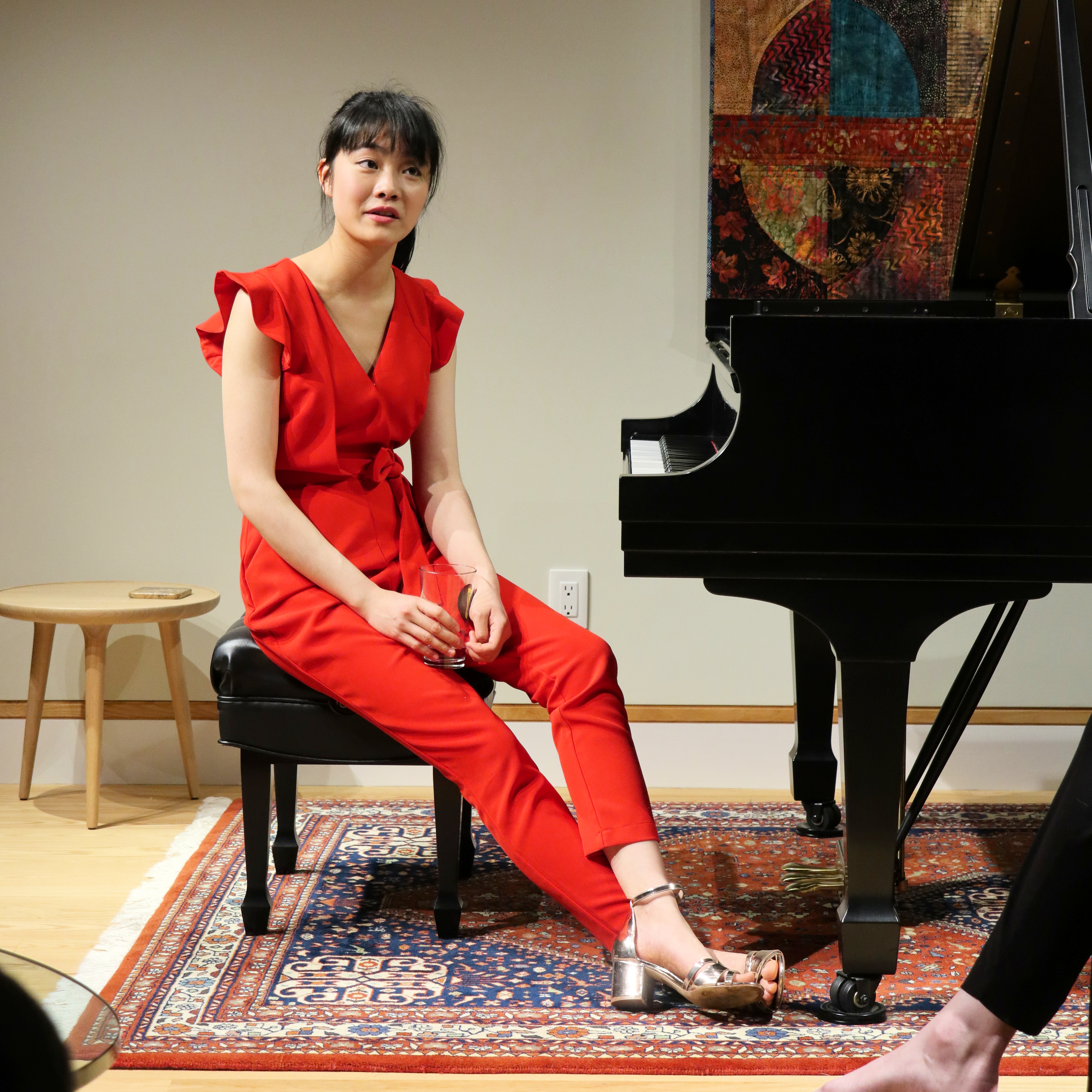
Tiffany Poon chatting with her audience

Closing Thoughts

This was Tiffany’s first house concert, and she was entertainingly and characteristically frank about not knowing protocols for taking bows and going offstage. After the performance, she sat at the piano and chatted with us for a lengthy period, taking questions and making no effort to bring things to a close.

This generosity of spirit will serve Tiffany well, although it may be harder to maintain once she is touring as a world class concert pianist. After this evening in Rhode Island, I have no doubt that she is capable of achieving this dream.

I was impressed by the Core Memory venue, an airy performance space with excellent lighting and good acoustics. Our host Craig Maynard did a great job setting this up. Events are open to the public but have limited seating, so sign up early!
Filed Under: Concerts, Public concerts Tagged With: Bach, Ballade, Barcarolle, Chopin, Core Memory, Craig Maynard, French Suite, Liebestraume, Liszt, Nocturne, Rhode Island, Schumann, Tiffany Poon, Träumerei

Pianist Cong Bi’s Carnegie Debut

Saturday, April 13th, 2019 by Ken Turner

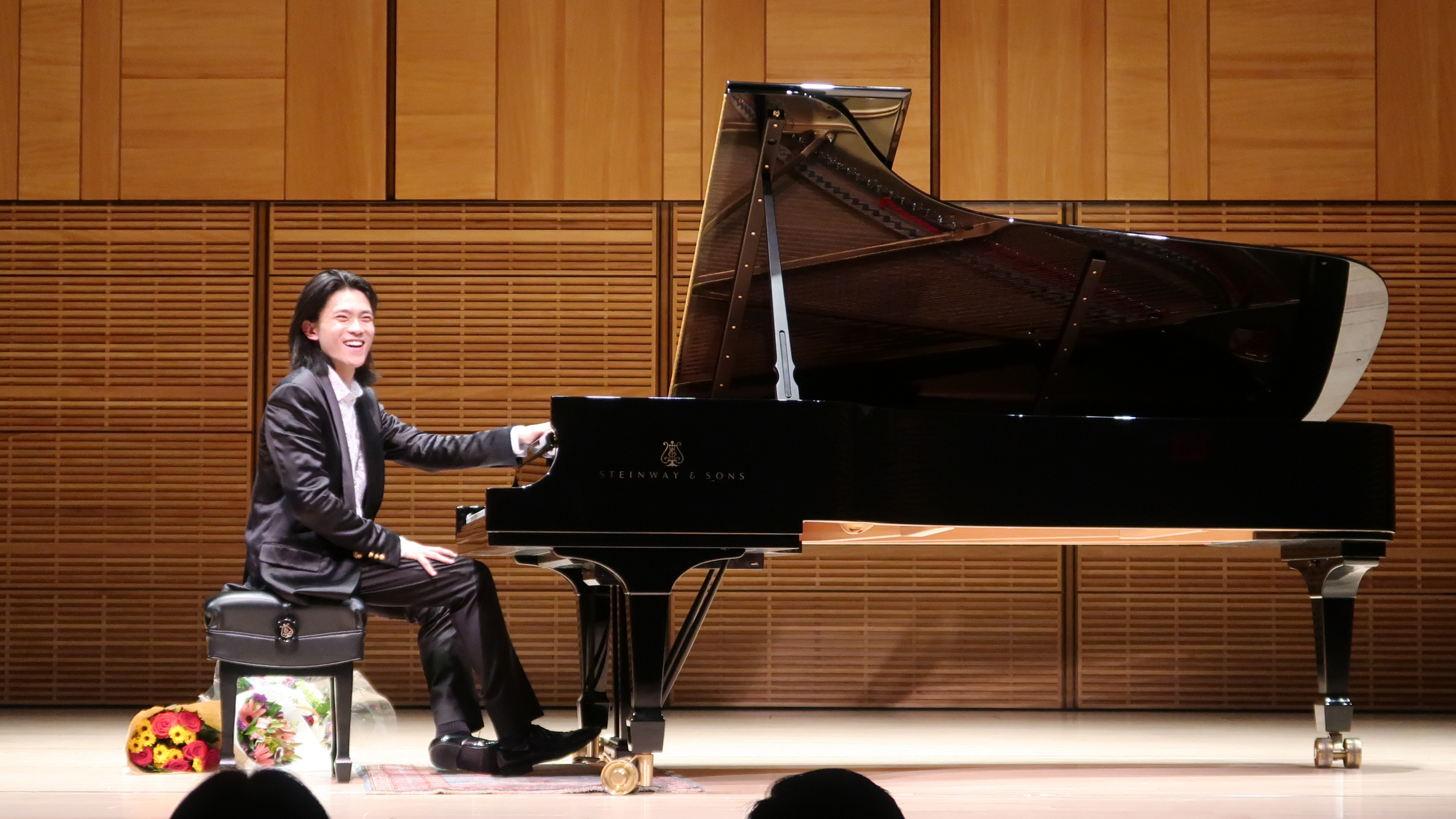
Cong Bi at Carnegie Hall April 12, 2019

Cong Bi’s Carnegie Hall Debut

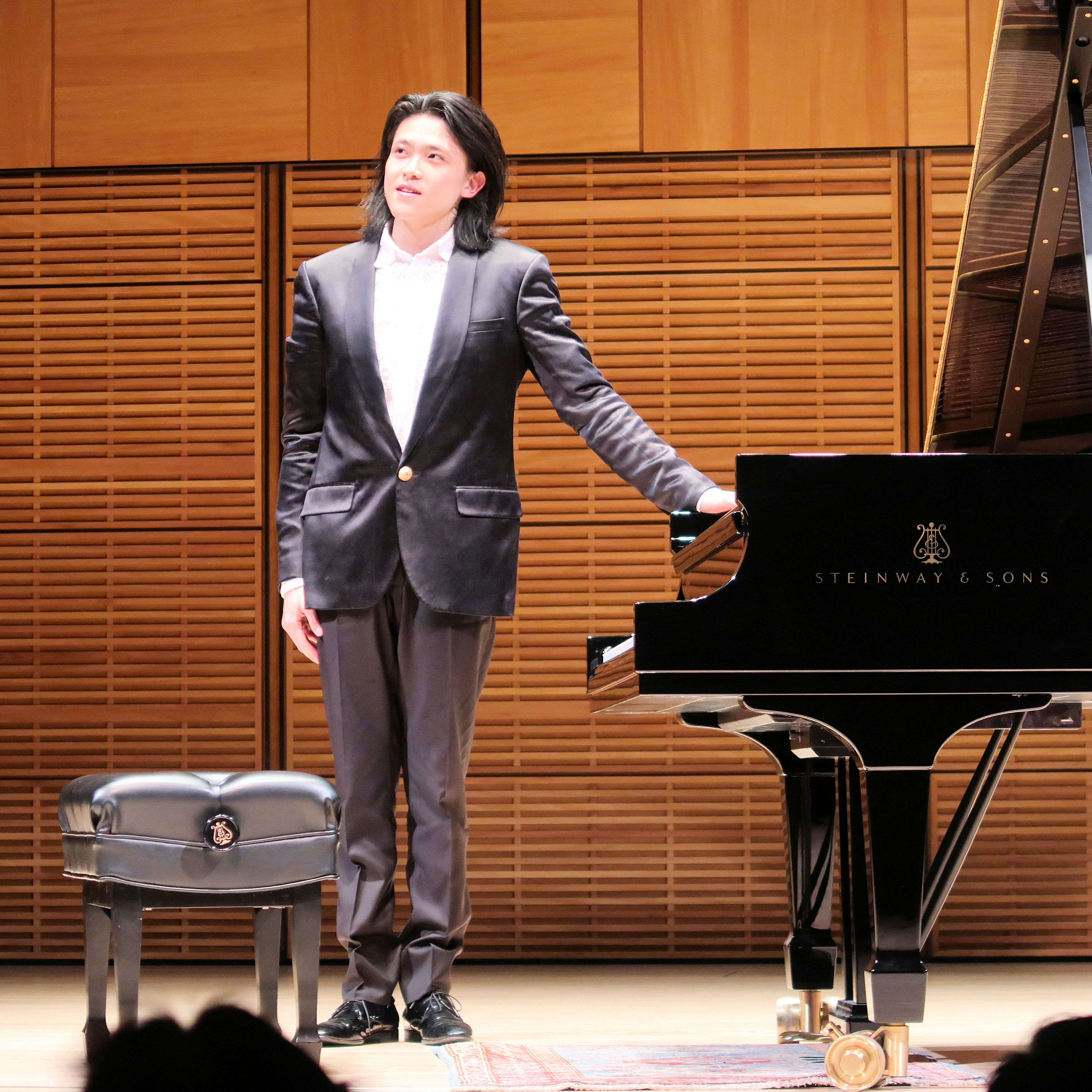
On April 12th 2019, Chinese pianist Cong Bi strolled on stage in Carnegie’s Zankel Hall for his Carnegie debut.

Relaxed and confident, he looked dashing in patent leather shoes, blue jacket and grey-ish pants.

A tall man with shoulder-length hair, Cong Bi stood with his hand over his heart for a few moments, prompting shrieks from the audience.

The last male pianist whom I saw have this effect at Carnegie was Korean superstar Seon Jin Cho.

Beethoven: Sonata No. 23 Op 57 (Appassionata)

This work was a bold opening gambit for Cong Bi’s Carnegie debut. He engaged the allegro assai with the conviction that we expect from a seasoned performer. However his arpeggios seemed rushed. That which should have glittered was too often blurry.

If Cong Bi overreached during the first movement, he made amends with his authentic andante con moto. This reviewer appreciated the left hand voicing in particular.

Schumann: Davidsbündlertänze, Op 6

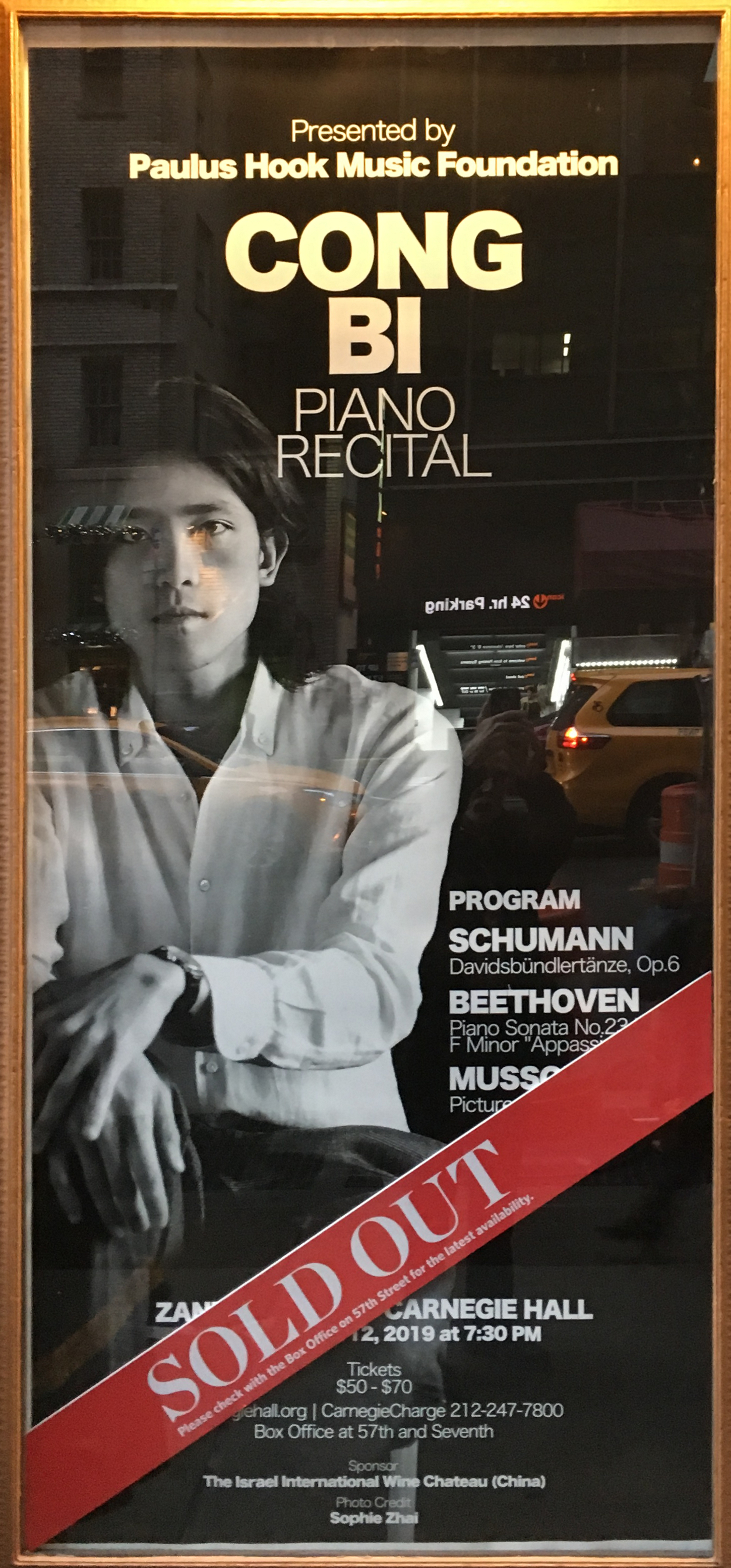
Cong Bi Carnegie Debut April 2019 Sold Out

Cong Bi – SOLD OUT!

Cong Bi’s rendition of this work was generally balanced and sweet, occasionally flamboyant. Since the works of Schumann mostly leave this reviewer unmoved, it would not be fair to the performer to comment further.

Mussorgsky: Pictures at an Exhibition

Cong Bi’s Pictures started cautiously and swelled into magnificence. This work can so easily become ponderous, but Cong Bi is not that kind of pianist. I appreciated his engaged, powerful delivery and excellent sense of timing.

However, we could have done without Cong Bi’s abrupt “pointing backwards” arm gestures! These attempts at pianistic drama did not work because they felt inauthentic. For this reviewer, only Lang Lang can get away with such gratuitous posturing.

Cong Bi jokes with his Carnegie audience

Cong Bi jokes with his Carnegie audience April 12, 2019

Encores: Bach

The first encore was a pleasant Bach work that nobody I spoke to could identify.

The second encore was Bach’s Prelude in C Major, BWV 846. Cong Bi played this deceptively simple work with divine translucence.

I’ve commented before on how pianists’ encore choices can be revealing. At the end of the day, Cong Bi did not go for a showpiece. Instead, he went for the sublime.

After the closing bars of Bach, the pianist played a very short jazzy riff. I took this as a youthful gesture of victory: “I got this”!  But maybe it was just for the young women who gave him flowers.

Closing thoughts

Cong Bi is an impressively self-assured and promising young pianist, at ease on stage and able to joust with his audience. In his Carnegie debut he showed himself to be equally at home with Beethoven’s raging Appassionata, Mussorgsky’s monumental Pictures, and Bach at his most ethereal. Watching him reminded me of the Washington Post article The Future of Classical Music is Chinese.

Cong Bi got better and better as the evening went on, but after the intermission I noticed a few empty seats. If only these people had stayed, they would have been rewarded with a stirring performance of Mussorgsky and some magical Bach. And of course, that cheeky riff!

My personal thanks to producer Qianci Liu for inviting me to this most enjoyable recital, and to the Paulus Hook Music Foundation for making it possible.


Filed Under: Concerts, Public concerts Tagged With: Appassionata, Bach, Beethoven, BWV 846, carnegie debut, Carnegie Hall, Cong Bi, Debut, Mussorgsky, Paulus Hook Music Foundation, Qianci Liu, Washington Post, Zankel Hall

Beatrice Rana Debuts at Carnegie

Wednesday, March 13th, 2019 by Ken Turner

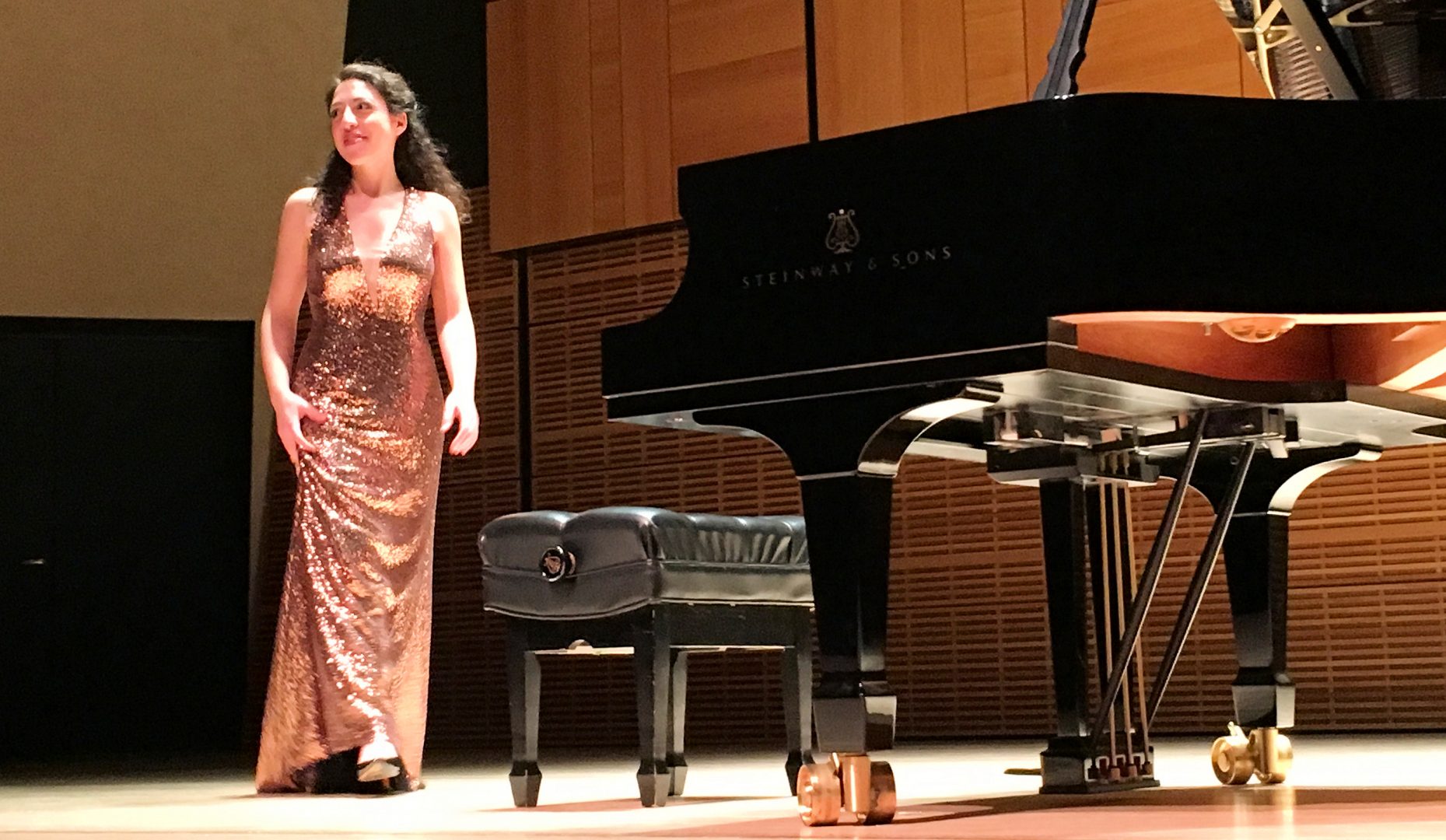
Beatrice Rana Carnegie Debut March 2019

Pianist Beatrice Rana at her Carnegie Debut March 2019

Beatrice Rana

On Tuesday March 12th 2019, Italian pianist Beatrice Rana made her Carnegie debut at Carnegie’s Zankel Hall.

A 2013 Van Cliburn competition silver medalist (see this photograph) Beatrice at age 25 has been performing in major concert halls around the world for years.

Zankel is a modest venue of about 600 seats, hardly intimidating to an experienced international pianist. But the New York audience is notoriously demanding.

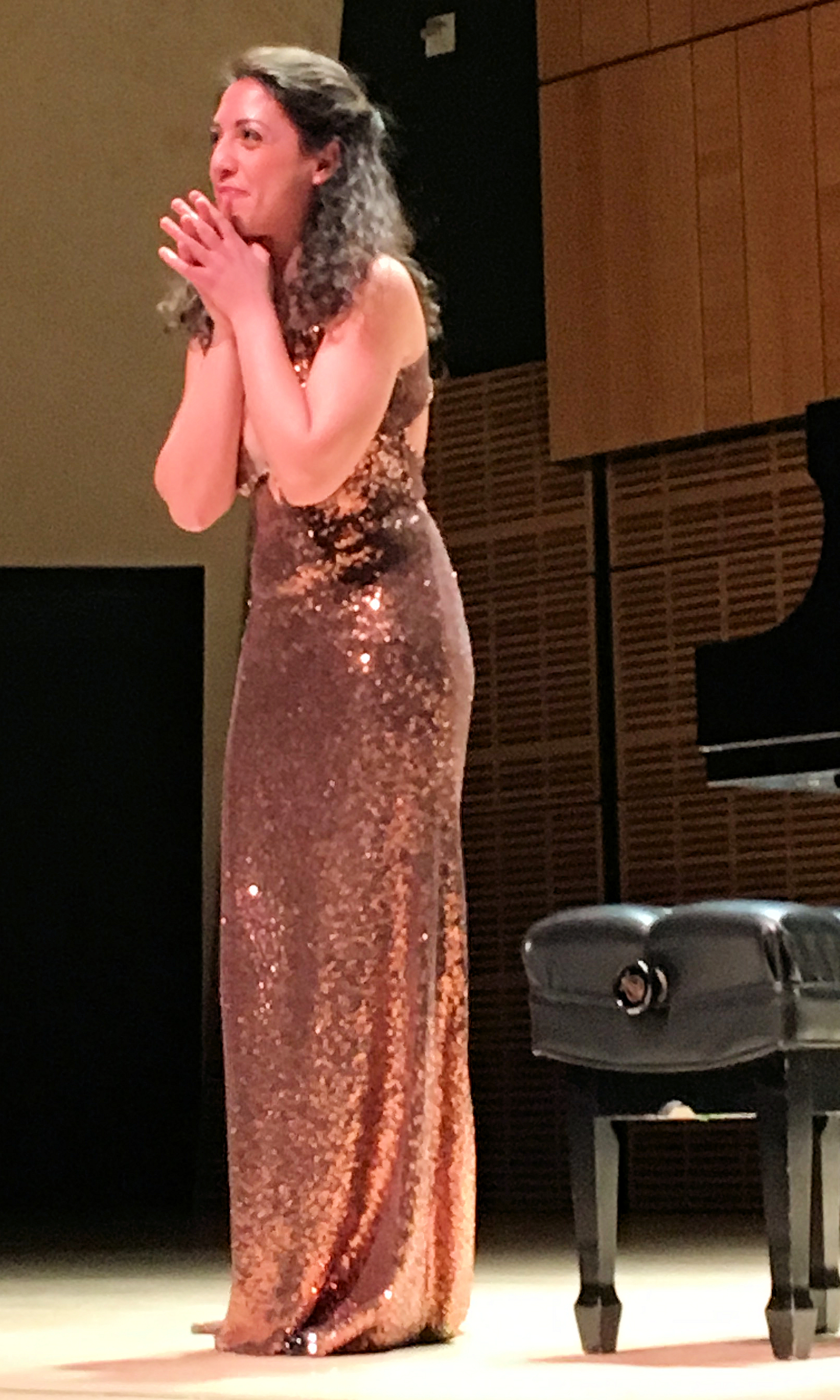
Ms. Rana came on stage in an elegant, floor-length sequined copper gown. If she was nervous, the only hint might have been how quickly she got down to business.

Chopin: Twelve Etudes Op. 25

Beatrice Rana on stage at her Carnegie debut

I love New York!

The drape of the copper gown presaged the flowing arpeggios and modulations of the first Etude (“Aeolian Harp”, A-flat Major). Ms. Rana’s damper work allowed the harp-like sonorities of this etude to glow.

Throughout the Etudes, Beatrice Rana focused intently on the keyboard. She employed no visual theatrics, going little further than the occasional lift of her right eyebrow. Her left hand came nicely forward when voicing called for it. I personally liked her well-managed pedal, however some people would have preferred different handling of harmonics in certain Etudes.

Ms. Rana sailed through technical challenges such as the Op. 26 No. 6 (“Thirds”, G-sharp minor) and particularly Op. 26 No 11 (“Winter Wind”, A minor), where she showed her virtuosity and prodigious power.

The final Etude Op. 26 no 12 (“Ocean”, C-sharp minor) was masterfully executed. During this aptly-labeled Etude Ms. Rana rocked from side to side, following her hands. Swaying is intrinsic to this work, but her dinghy-like rock-and-roll was so pronounced that I wondered if it was intended as a metaphor for Chopin’s waves.

Ravel: Miroirs

Miroirs is an evocative 5-section suite for solo piano, a well-chosen programmatic bridge between Chopin and Stravinsky.

After Ms. Rana’s sublime pedalwork for Chopin, I looked forward to hearing her project the sonorities of Ravel. But although her delivery was fine, I was not entirely satisfied. I can’t point to anything specific, but it felt a little choppy.

Of course, it may be that the disconnect is on the reviewer’s side.

Stravinsky: Three Movements from The Firebird

This exciting piano transcription by Agosti of 3 sections from Stravinsky’s Firebird suite is a concert favorite. Beatrice Rana gave a spirited rendering. No harmonic muddying here! I loved her marcatissimo closing.

Encores

After the main program, Beatrice treated us to two encores by Chopin: Prelude in F# minor Opus 28 and Scherzo #18 in B flat minor. She has an obvious flair for Chopin, so it made for a fun ending to a great evening.

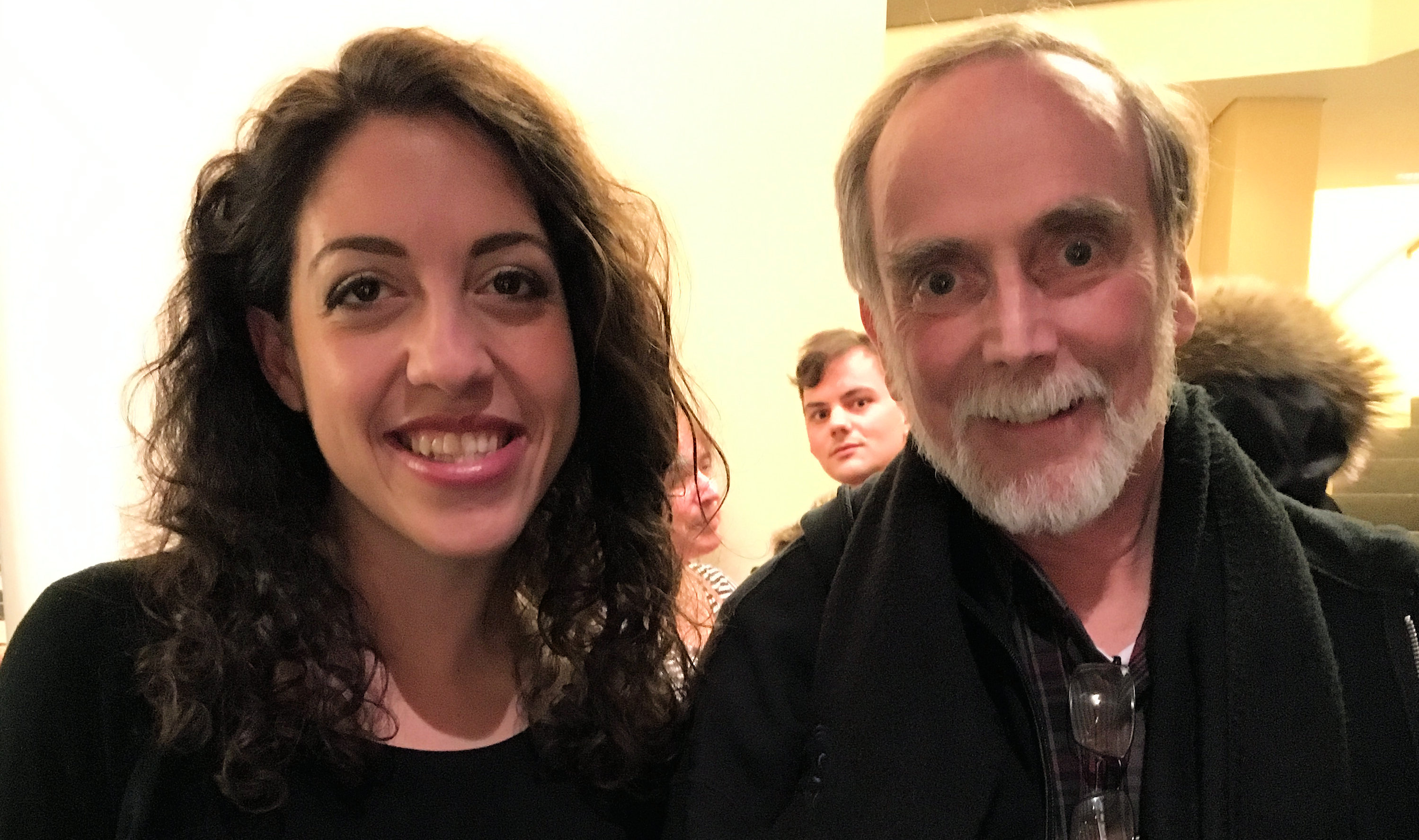
Pianist Beatrice Rana at Carnegie after her debut with Ken Turner

Beatrice Rana at Carnegie with author Ken Turner

Meeting Beatrice

After the recital we went to the Carnegie “Mix and Mingle” event.

To our delight Beatrice (pronounced Bay-ah-tree-cheh) Rana herself came out to join us, friendly and accommodating to her fans.

Of all the questions I had for Ms. Rana, there was time for just one. So I asked her how it felt to walk out on stage at Carnegie for the first time. “Exciting”, she gleamed.

For more about Beatrice Rana, see her web site at www.beatricepiano.com.

Filed Under: Concerts, Public concerts Tagged With: Beatrice Rana, Carnegie Hall, Carnegie Zankel, Chopin, Debut, pianist, piano, Ravel, Stravinsky

« Previous Page
Next Page »

©2025 Ken Turner | Roving Pianist


Loading Comments...
 

You must be logged in to post a comment.