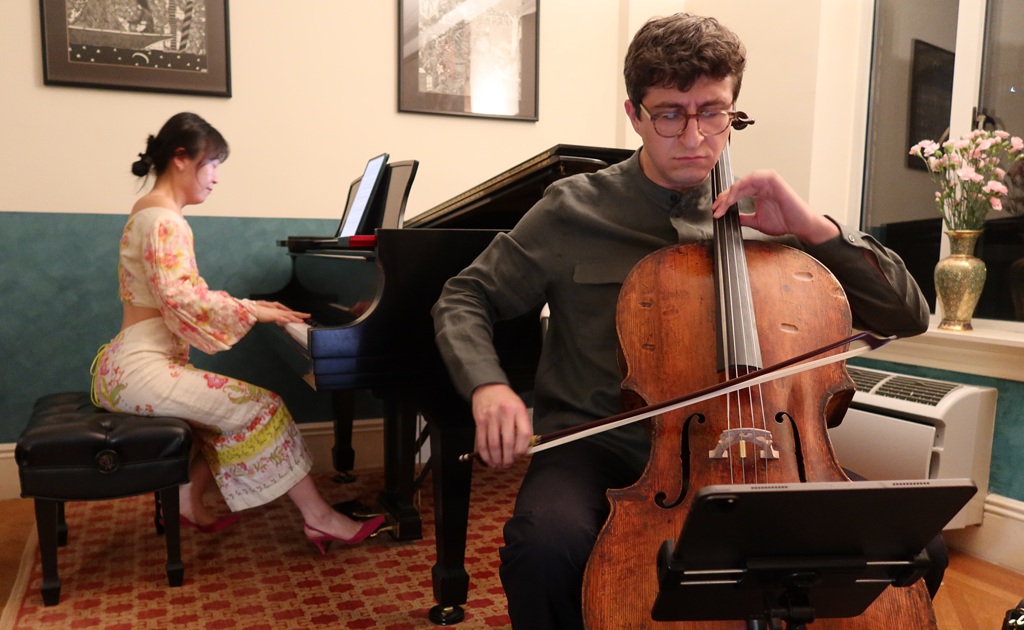
Min Young Kang and Joshua Halpern
On Saturday March 28th, 2026 I attended a Salon Concert at the Shoemaker residence in NYC. The concert featured cellist Joshua Halpern and collaborative pianist Min Young Kang.
Mr. Halpern introduced the program of duets, which had two sections: French and German. He contrasted the traditional style of Saint-Saëns with the more experimental nature of Gabriel Fauré.
He also discussed the Schumann-Brahms relationship. I was surprised to learn that they met only 3 years before Schumann passed away.
Saint-Saëns: Two Romances
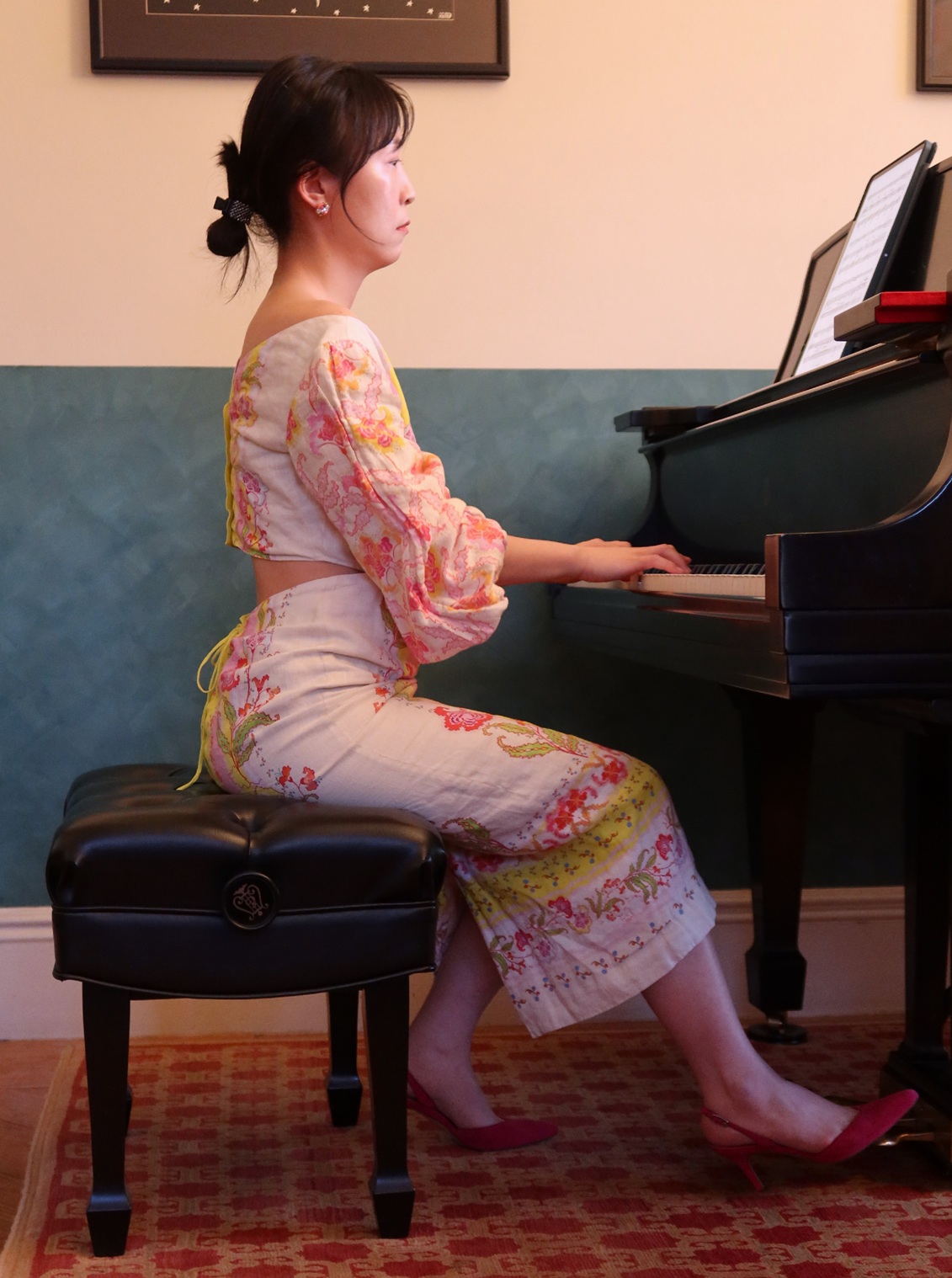
Min Young Kang NYC 3/28/2026
The first romance (F major Op. 36) consisted of long cello phrases over slow, dance-like piano. The middle section was more jagged, then the serene main theme returned. I loved the sensitive interplay between piano and cello, a finely-tuned collaboration where the two musicians played as one. Impressive, given that this was their first public performance of this work!
In the second romance (D major, Op. 51) the piano was more forward and engaging, and the cello part seemed harder. While this romance had a beautiful ending, my heart was still with the first (Op. 36).
Fauré: Sonata for Cello & Piano No. 1 in D minor, Op. 109
(Portions provided by Ms. Diana Zalisna)
After the Saint-Saëns appetizers, Faure’s wartime (1917) work felt uncomfortable. The unsettled pulse of the opening Allegro, delivered with conviction by pianist Min Young Kang, contrasted with the more melodic cello. At times the piano chirped above and around the cello, like flashes of sunlight. The allegro closed with a brisk intertwining of cello and piano that elicited cheers from the audience.
The Andante started out sparse and agonized, before transforming into reflective, melodious cello over fragmented piano. The deep low end of Mr. Halpern’s cello grieved, yet there was hope as the piano sought to create light. The movement ended on a serene path of piano footsteps and fading cello.
The last movement Final – Allegro Comodo brought a welcome sense of release. The restless energy of the opening returned, lighter and more focused. The piano laid down a rhythmic foundation while the cello sang over it, tightly coordinated yet distinct. What had felt unsettled earlier now seemed to find its direction. Rather than just an energetic ending, this was a culmination that resolved the sonata’s inner conflicts and brought the work to a satisfying close.
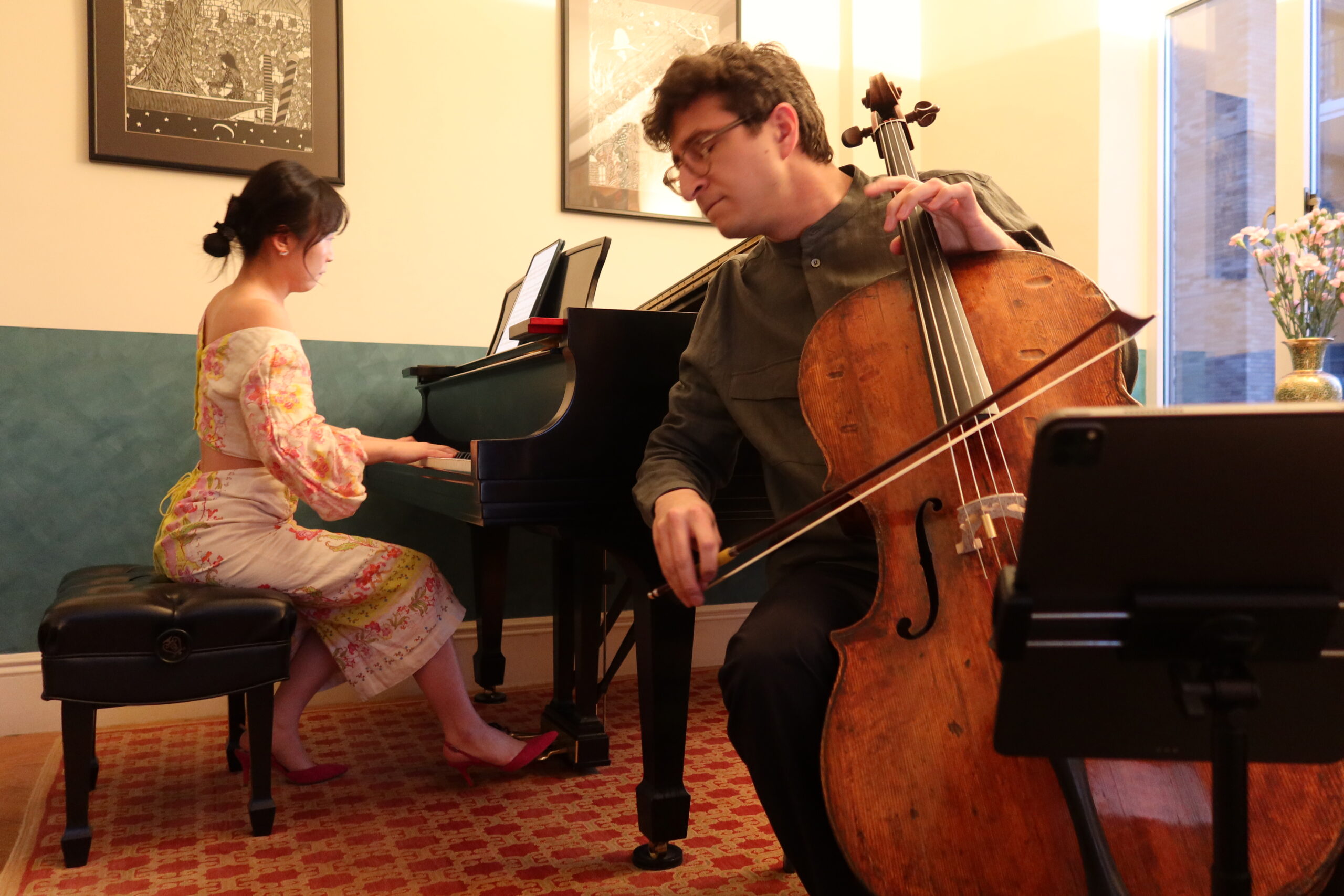
Really getting into it
Robert Schumann: Fantasiestücke, Op. 73
Introducing this work, Joshua Halpern explained Schumann’s use of different personas, notably the extroverted Florestan and the introverted Eusebius. These can be linked to the frequent and violent mood swings in Schumann’s compositions.
I found Fantasiestücke difficult to follow, because it felt fragmented and rambling. Perhaps Schumann’s personas were to blame, or perhaps I simply do not know this work well enough. However the perfectly aligned musicianship of the performers was unmistakable and impressive. At the close, some people cheered.
Brahms: Sonata for piano and cello in E minor, Op. 38
Joshua Halpern introduced this 1860’s work as young Brahms, contrasting it with Brahms’ second cello sonata written decades later. He also discussed Brahms’ roots in Bach and Beethoven.
The sonata opened in the gorgeous lowest register of the cello. Throughout the lengthy first movement the tonal richness of the cello blended well with Min Young Kang’s nimble piano. I occasionally sensed Beethoven in the piano, perhaps because of Mr. Halpern’s introduction. A couple of times I noted a descending motif that sounded like a precursor to the charming Intermezzo Op. 117 No. 1 that Brahms wrote 30 years later.
I enjoyed the droll, cheeky second movement (Allegretto Quasi Menuetto), but was puzzled by the absence of a slow movement. I later learned that Brahms had written one but discarded it.
The final Allegro consisted of spirited, often fugal dialogs between piano and cello that had my foot tapping. I’ve never thought of Brahms as “fun”, but the Allegro was a breath of fresh air after the weighty repertoire of Schumann and Fauré.
Encore
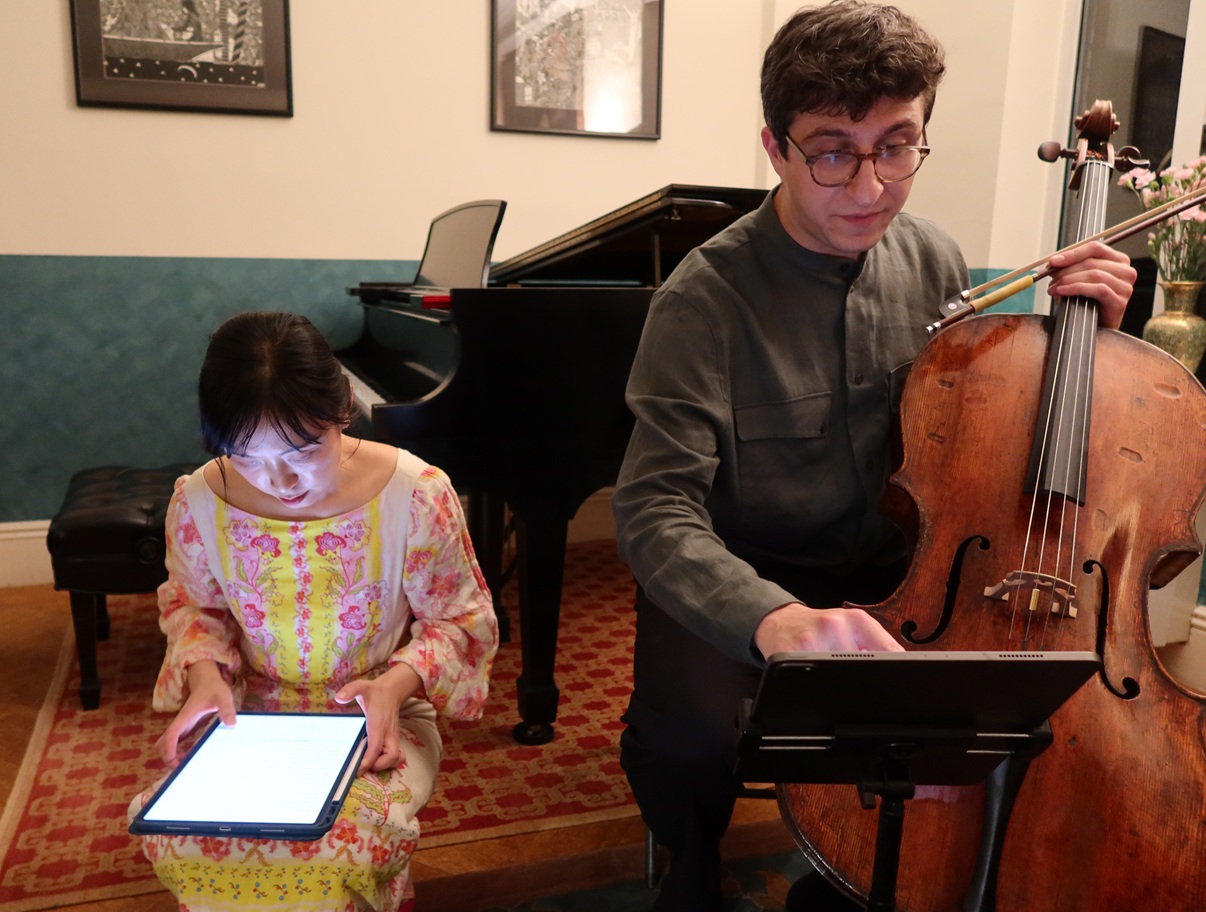
Finding Clara Schumann
Responding to clamor from their audience, Joshua and Min Young agreed to do an encore. I assumed that they had planned this. However as they struggled to find Clara Schumann’s Ich stand in dunklen Traumen in their digital tablets, I realized that these wonderful musicians were unprepared! But they found her, and gave a touching performance of this two-minute gem.
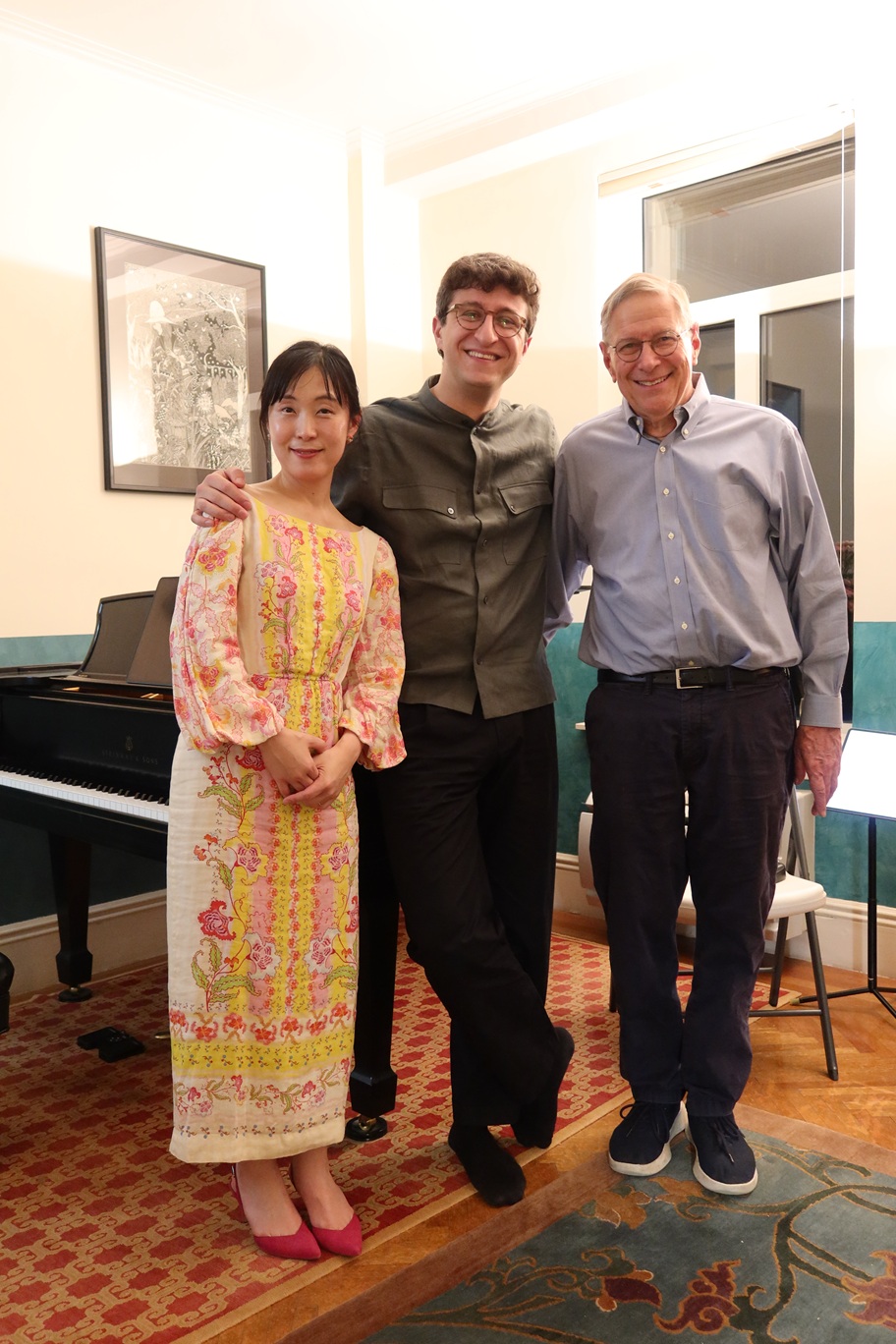
Min Young and Joshua with host Robin Shoemaker
About that Cello
Sitting near the cello, I noticed that it had a woodsy scent. Intrigued, I consulted Mr. Halpern. He explained that Domenico Busan of Venice made the cello around 1750. It had belonged to his former teacher Desmond Hoebig, and is now becoming acclimated to Mr. Halpern’s way of playing.
Closing Thoughts
We enjoyed Joshua Halpern’s informative commentary, salted with wry humor. I would have liked to hear more from pianist Min Young Kang. Her low-key presence made it easy to take the piano for granted. But in this recital the piano was the cello’s flawless peer, and integral to the impassioned musical experience that they created together.
You must be logged in to post a comment.