ROVING PIANIST

WHO KNOWS WHERE HE WILL SHOW UP NEXT?

  • Home
    • Register
    • Log In
  • Concerts
    • Public concerts
    • Private Concerts
  • Quick Takes
  • Piano Blog
  • Other
  • Contact
  • About
    • About The Author
    • Privacy Policy
You are here: Home / Archives for Gabriel Fauré

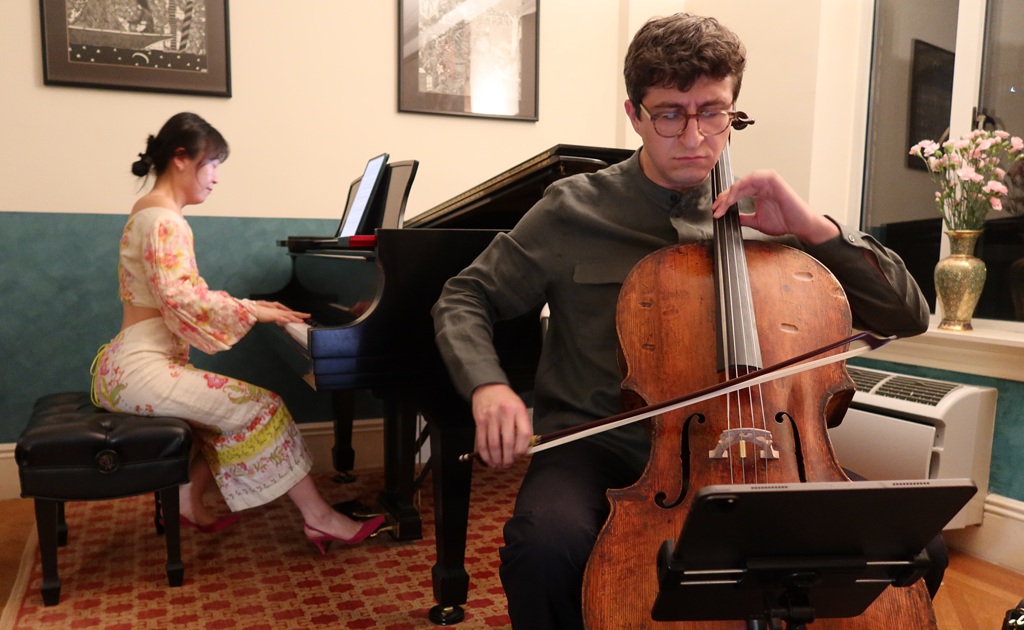
Kang and Halpern duo charm NYC Salon

Friday, April 3rd, 2026 by Ken Turner

Min Young Kang and Joshua Halpern

On Saturday March 28th, 2026 I attended a Salon Concert at the Shoemaker residence in NYC. The concert featured cellist Joshua Halpern and collaborative pianist Min Young Kang.

Mr. Halpern introduced the program of duets, which had two sections: French and German. He contrasted the traditional style of Saint-Saëns with the more experimental nature of Gabriel Fauré.

He also discussed the Schumann-Brahms relationship. I was surprised to learn that they met only 3 years before Schumann passed away.

Saint-Saëns: Two Romances
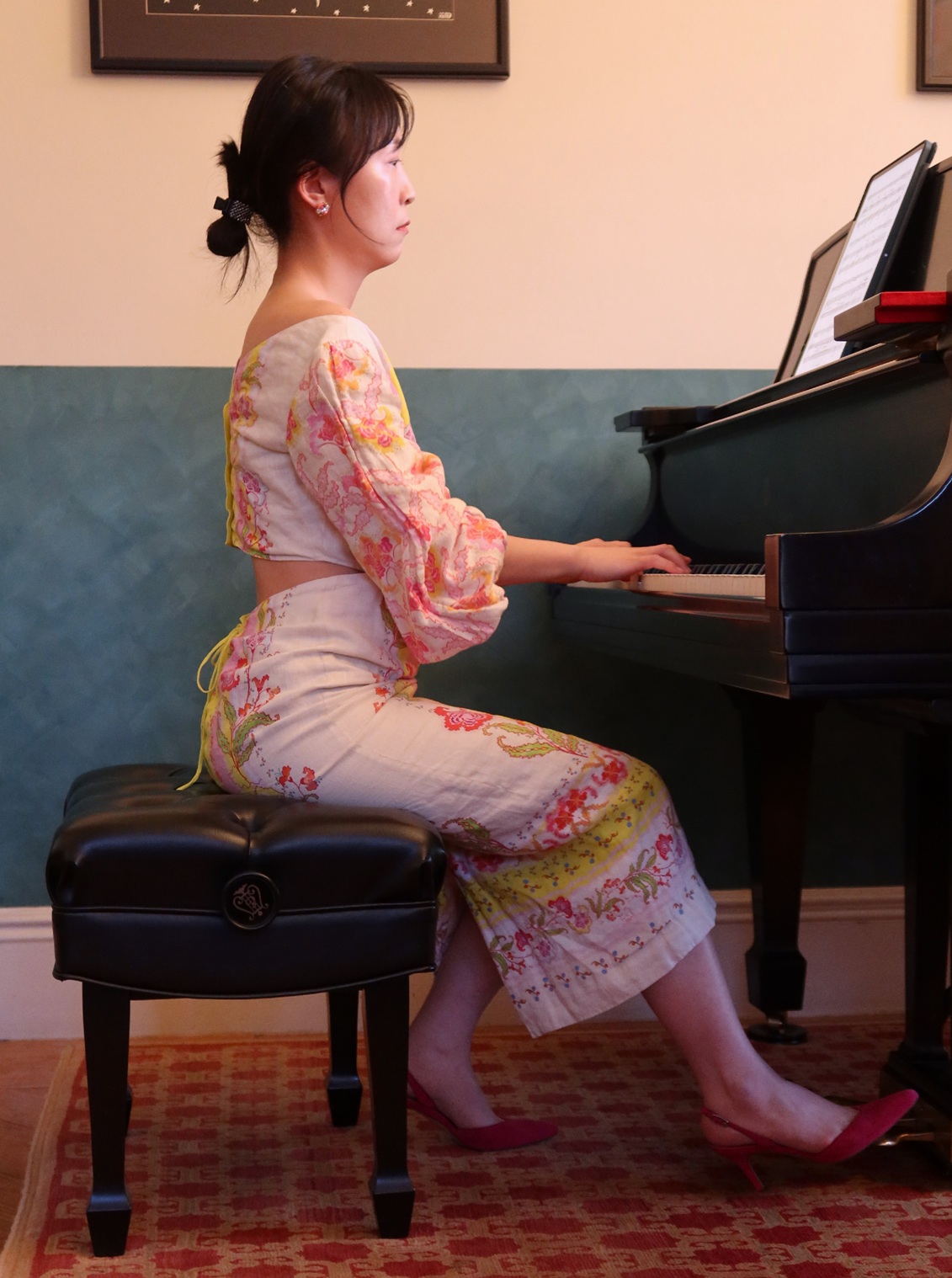
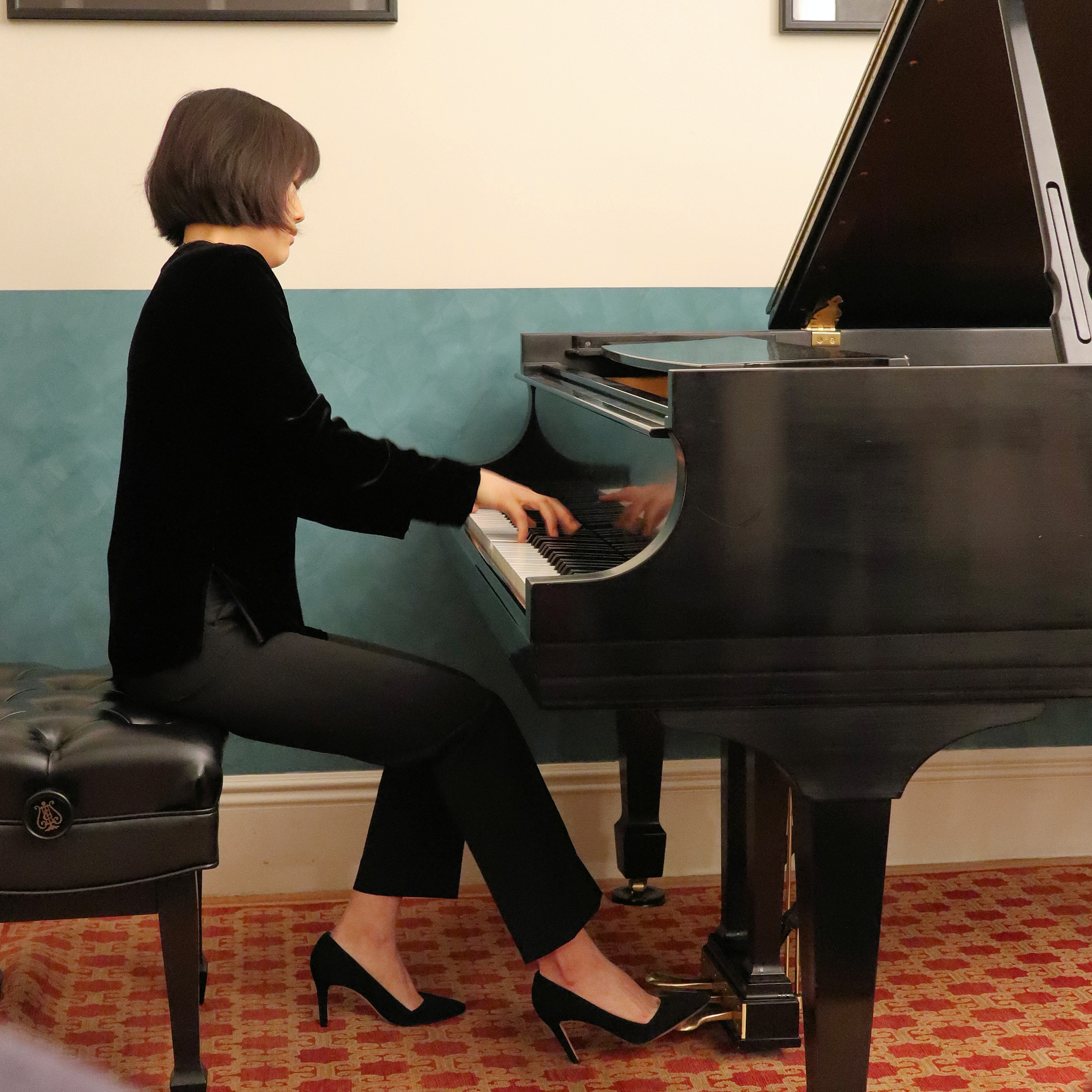
Min Young Kang NYC 3/28/2026

The first romance (F major Op. 36) consisted of long cello phrases over slow, dance-like piano. The middle section was more jagged, then the serene main theme returned. I loved the sensitive interplay between piano and cello, a finely-tuned collaboration where the two musicians played as one. Impressive, given that this was their first public performance of this work!

In the second romance (D major, Op. 51) the piano was more forward and engaging, and the cello part seemed harder. While this romance had a beautiful ending, my heart was still with the first (Op. 36).

Fauré: Sonata for Cello & Piano No. 1 in D minor, Op. 109

(Portions provided by Ms. Diana Zalisna)

After the Saint-Saëns appetizers, Faure’s wartime (1917) work felt uncomfortable. The unsettled pulse of the opening Allegro, delivered with conviction by pianist Min Young Kang, contrasted with the more melodic cello.  At times the piano chirped above and around the cello, like flashes of sunlight. The allegro closed with a brisk intertwining of cello and piano that elicited cheers from the audience.

The Andante started out sparse and agonized, before transforming into reflective, melodious cello over fragmented piano. The deep low end of Mr. Halpern’s cello grieved, yet there was hope as the piano sought to create light. The movement ended on a serene path of piano footsteps and fading cello.

The last movement Final – Allegro Comodo brought a welcome sense of release. The restless energy of the opening returned, lighter and more focused. The piano laid down a rhythmic foundation while the cello sang over it, tightly coordinated yet distinct. What had felt unsettled earlier now seemed to find its direction. Rather than just an energetic ending, this was a culmination that resolved the sonata’s inner conflicts and brought the work to a satisfying close.
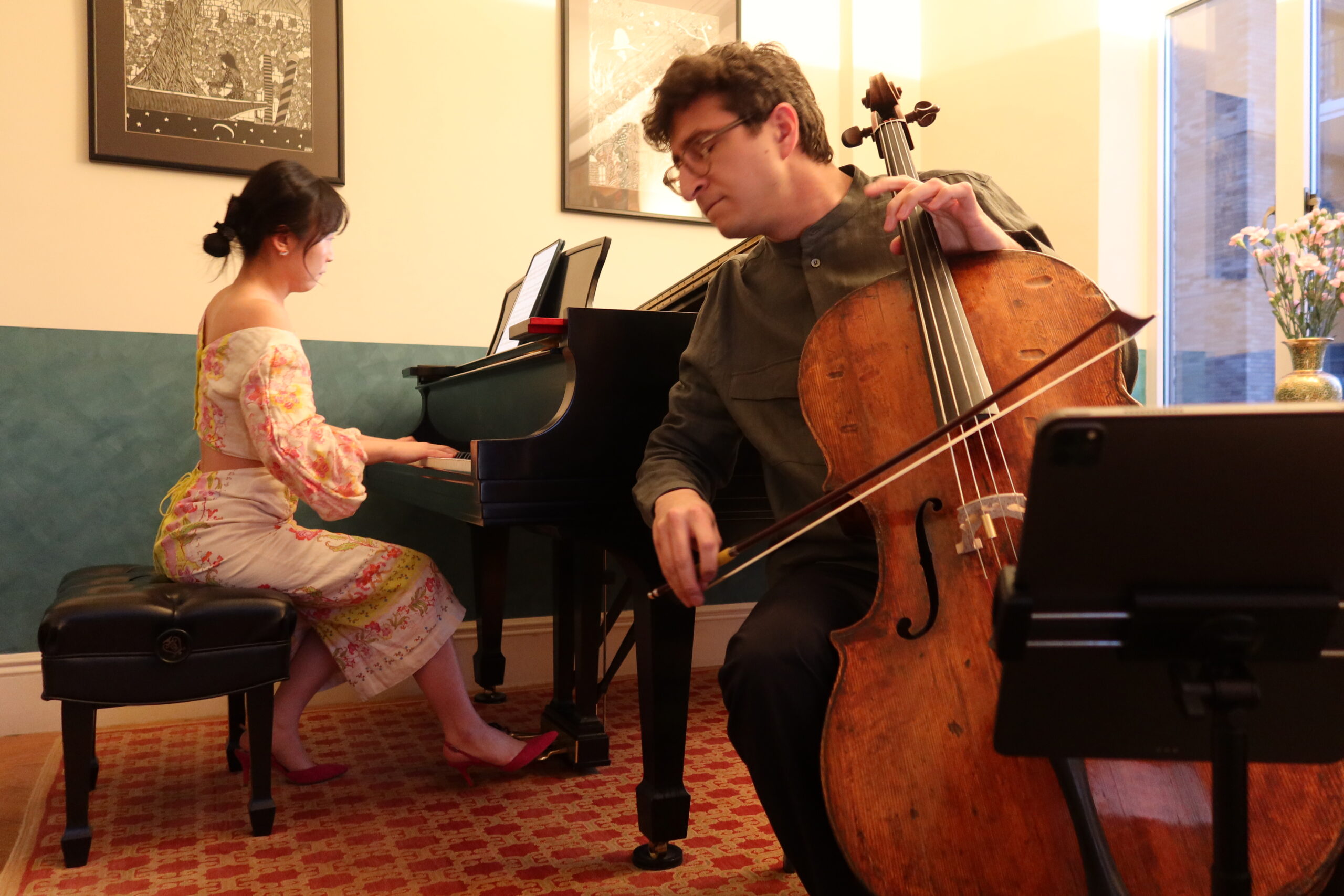
Really getting into it

Robert Schumann: Fantasiestücke, Op. 73

Introducing this work, Joshua Halpern explained Schumann’s use of different personas, notably the extroverted Florestan and the introverted Eusebius. These can be linked to the frequent and violent mood swings in Schumann’s compositions.

I found Fantasiestücke difficult to follow, because it felt fragmented and rambling. Perhaps Schumann’s personas were to blame, or perhaps I simply do not know this work well enough. However the perfectly aligned musicianship of the performers was unmistakable and impressive. At the close, some people cheered.

Brahms: Sonata for piano and cello in E minor, Op. 38

Joshua Halpern introduced this 1860’s work as young Brahms, contrasting it with Brahms’ second cello sonata written decades later. He also discussed Brahms’ roots in Bach and Beethoven.

The sonata opened in the gorgeous lowest register of the cello. Throughout the lengthy first movement the tonal richness of the cello blended well with Min Young Kang’s nimble piano. I occasionally sensed Beethoven in the piano, perhaps because of Mr. Halpern’s introduction. A couple of times I noted a descending motif that sounded like a precursor to the charming Intermezzo Op. 117  No. 1 that Brahms wrote 30 years later.

I enjoyed the droll, cheeky second movement (Allegretto Quasi Menuetto), but was puzzled by the absence of a slow movement. I later learned that Brahms had written one but discarded it.

The final Allegro consisted of spirited, often fugal dialogs between piano and cello that had my foot tapping. I’ve never thought of Brahms as “fun”, but the Allegro was a breath of fresh air after the weighty repertoire of Schumann and Fauré.

Encore
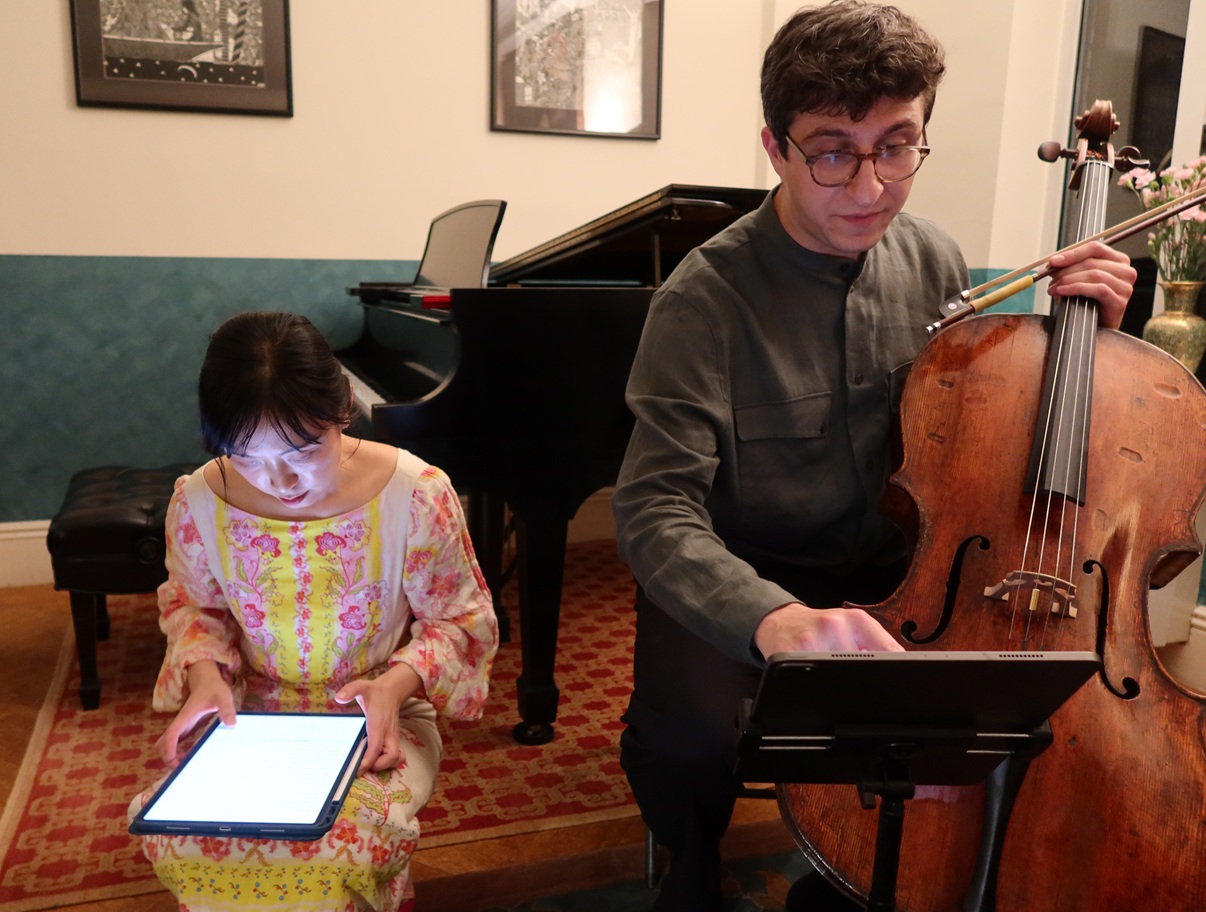
Finding Clara Schumann

Responding to clamor from their audience, Joshua and Min Young agreed to do an encore. I assumed that they had planned this. However as they struggled to find Clara Schumann’s Ich stand in dunklen Traumen in their digital tablets, I realized that these wonderful musicians were unprepared! But they found her, and gave a touching performance of this two-minute gem.
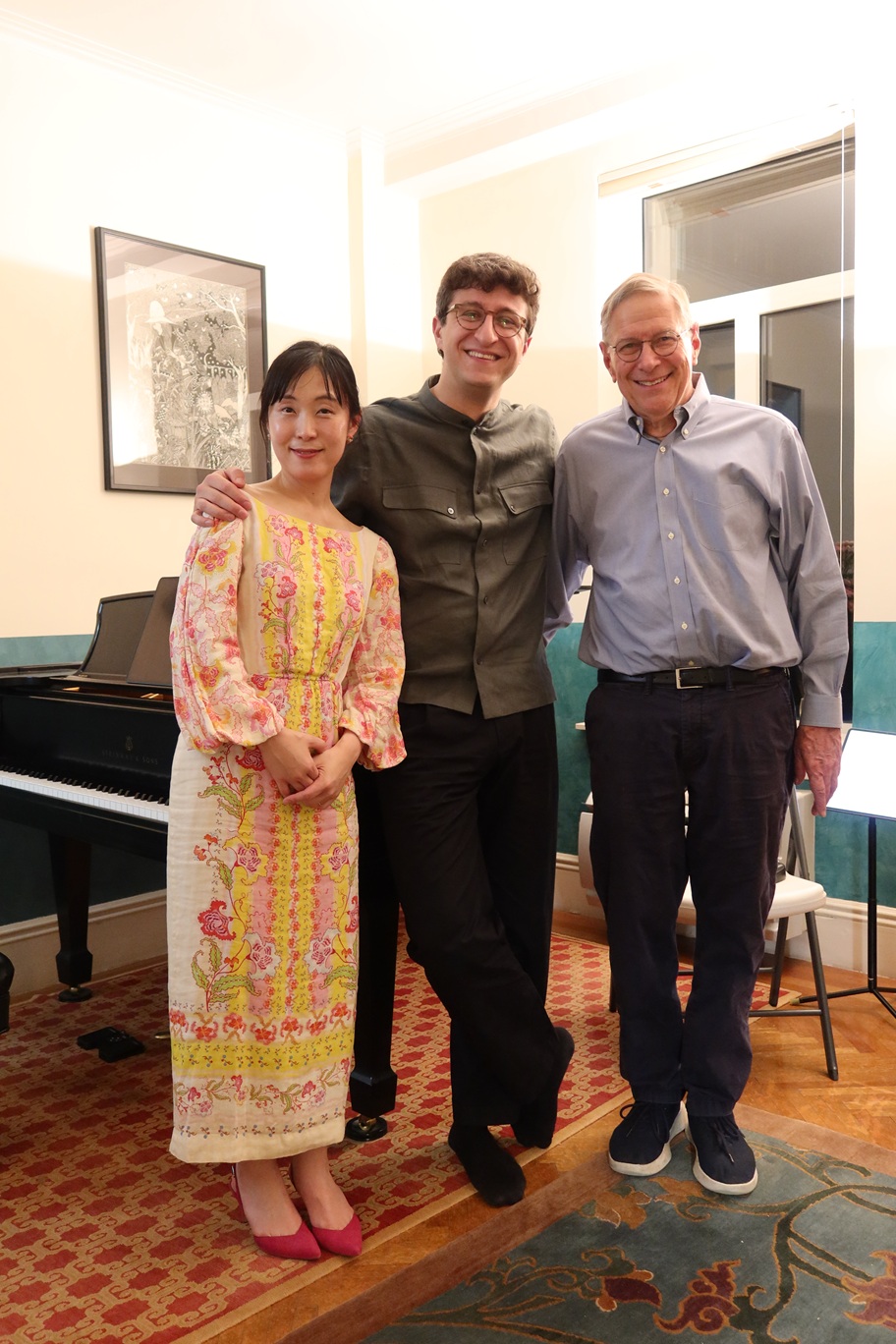
Min Young and Joshua with host Robin Shoemaker

About that Cello

Sitting near the cello, I noticed that it had a woodsy scent. Intrigued, I consulted Mr. Halpern. He explained that Domenico Busan of Venice made the cello around 1750. It had belonged to his former teacher Desmond Hoebig, and is now becoming acclimated to Mr. Halpern’s way of playing.

Closing Thoughts

We enjoyed Joshua Halpern’s informative commentary, salted with wry humor. I would have liked to hear more from pianist Min Young Kang. Her low-key presence made it easy to take the piano for granted. But in this recital the piano was the cello’s flawless peer, and integral to the impassioned musical experience that they created together.
 

Filed Under: Concerts, Private Concerts Tagged With: Brahms, cello, Clara Schumann, Diana Zalisna, Domenico Busan, Gabriel Fauré, Joshua Halpern, Min Young Kang, Robert Schumann, Robin Shoemaker, Saint-Saëns

Flutist Ginevra Petrucci and Pianist Matthieu Cognet in NYC

Thursday, March 6th, 2025 by Ken Turner

Petrucci and the Golden Flute

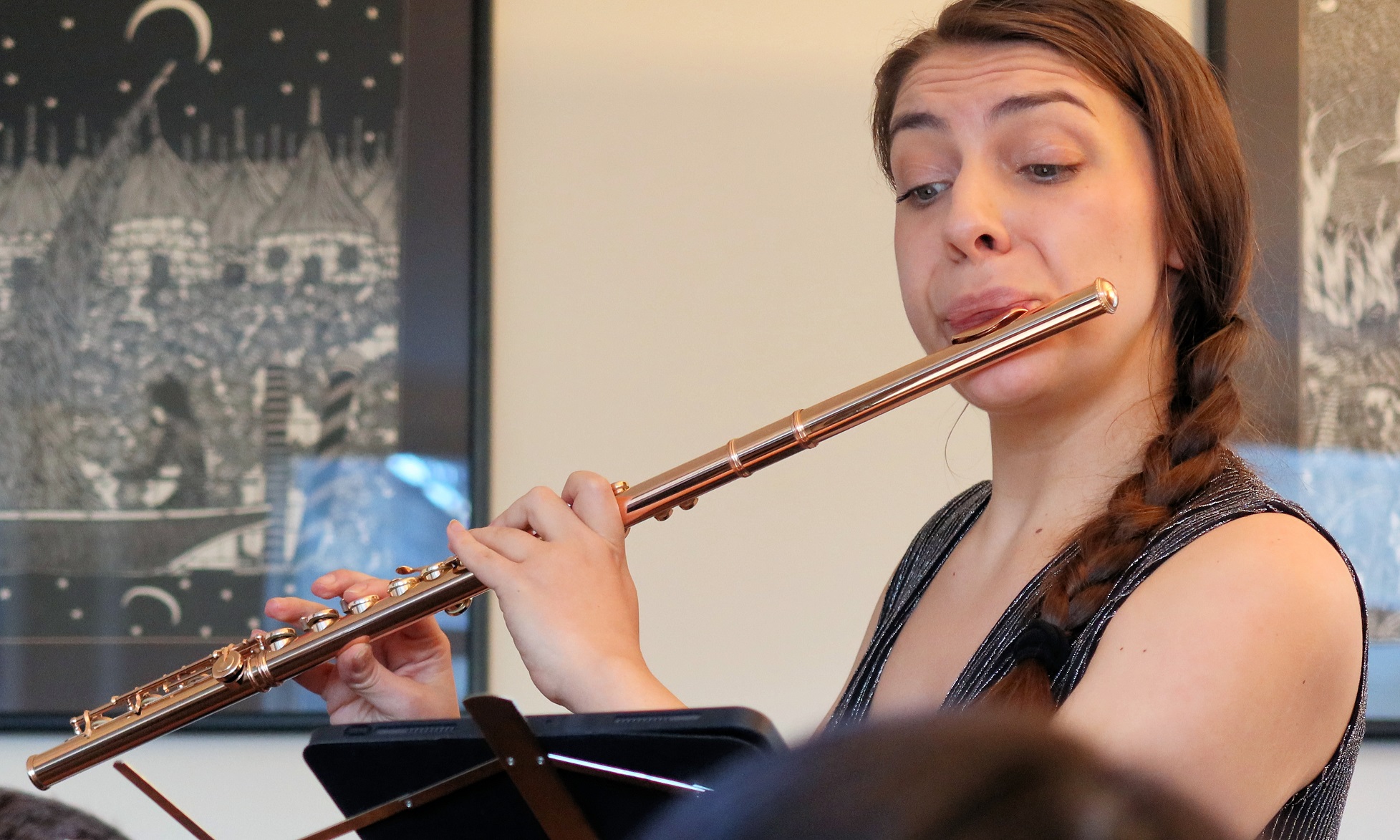
Ginevra Petrucci performing in New York, March 2025

On March 2nd, 2025, I was privileged to attend the Shoemaker Salon for an all-French recital by Italian flutist Ginevra Petrucci and French pianist Matthieu Cognet. I was accompanied by flutist Emily Piccola, who provided insights for this article.

The Program

The sonatas being performed were written for violin. The first (Fauré) was completed in 1876, while the second (Franck) was written in 1886. Both composers are considered to be late Romantic era, and both works feel quintessentially French.

Gabriel Fauré Sonata No.1 in A Major Op. 13

Fauré’s Sonata opened with a rolling piano introduction, evolving into flowing repartee between piano and flute. The piano would lead and the flute repeat, or the flute would lead and the piano echo and ornament.

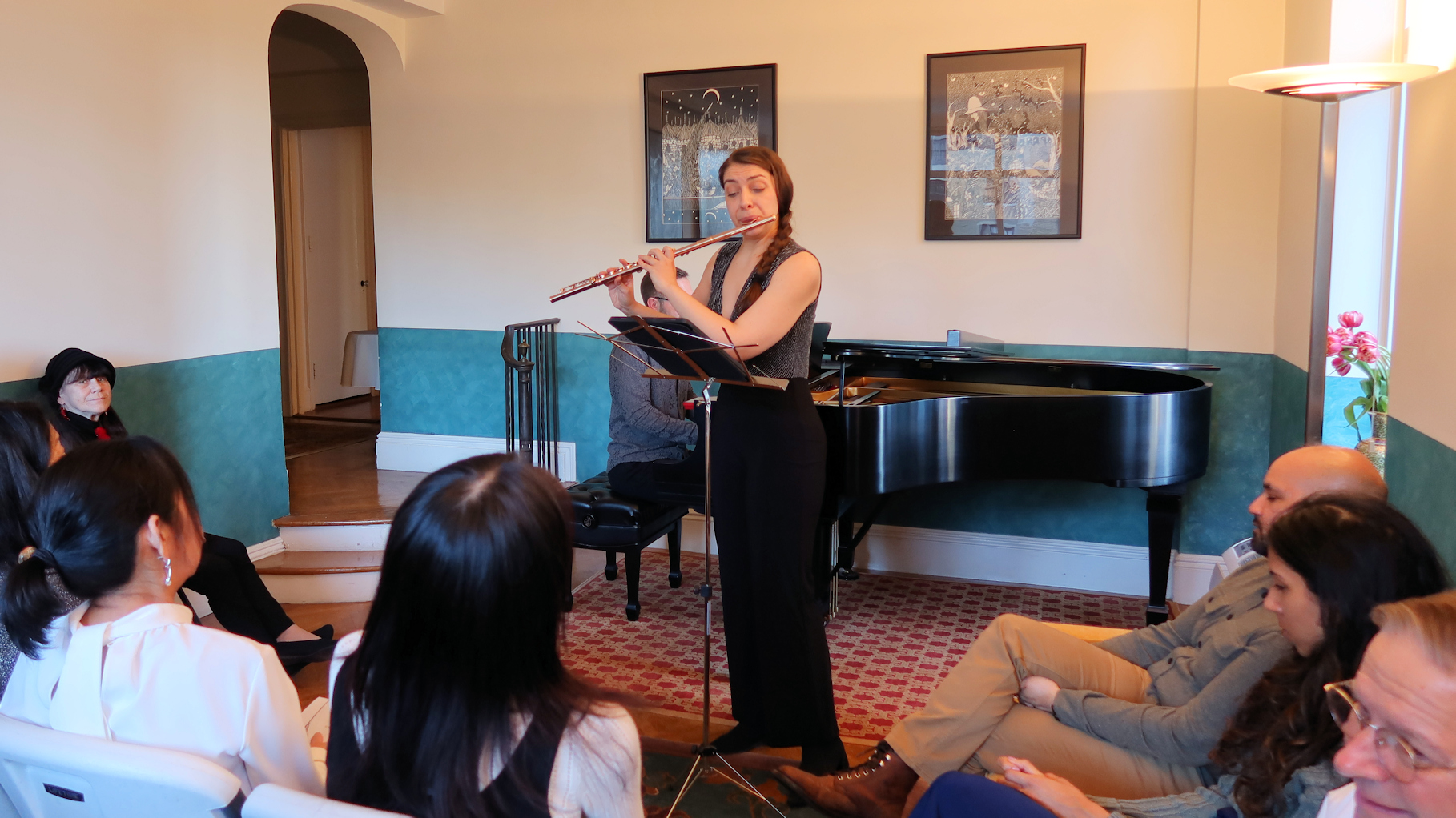
Ginevra Petrucci (flute) and Matthieu Cognet (piano) in NYC

Audience view

The second movement (Andante) began with somber D minor piano in the rhythm of a Barcarolle. The flute started low and fluid, perhaps suggesting the singing of a Venetian gondolier. Finally like sun breaking through clouds, the movement closed in D major.

A short Scherzo followed, opening with fast staccato. Again the flute and piano would echo each other. A softer middle section transitioned back to the staccato of the opening, leading to a playful finish.

The last movement (Finale) opened with a haunting flute melody. This was partnered with the clearest, most singing piano we had heard so far. I loved how the musicians passed leadership back and forth during the interplay of their instruments. We noted use of the flute’s high register for emotional tension, a technique employed by Fauré in other works. The work closed with a brief, satisfyingly virtuosic coda.

César Franck Sonata in A Major

Franck’s Violin Sonata in A Major was written as a gift to Belgian violinist Eugène Ysaÿe. It has been transcribed for various instruments, including the flute. However for this concert, flutist Ginevra Petrucci played directly from the violin part.

The piano opened with a gentle, reflective theme. The flute entered and danced over the piano like a ballerina. As the movement progressed, the instruments ebbed and flowed around each other with grace and serenity.

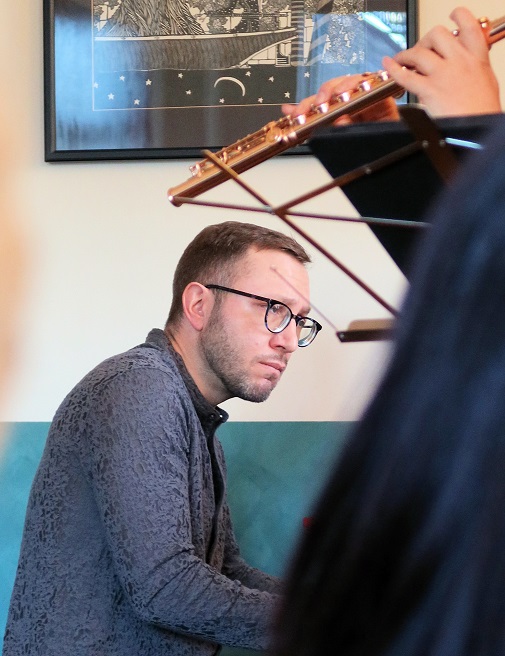
Unsung hero pianist Matthieu Cognet

Pianist Matthieu Cognet NYC 2025

In contrast, the second movement (Allegro) opened with dark, ominous piano. The flute followed, the instruments swirling around each other. A slower mid-section reduced the tension briefly. The movement ended with a brooding climb to a clattering climax.

The third movement (Ben moderato) followed attacca (immediately) with mournful piano and bird-like flute. There were hints of earlier movements, and of the upcoming finale. The movement closed wistfully with low flute over muted piano arpeggios.

The final movement opens with the famous A major theme that we had been waiting for, played canonically by each instrument. A winding series of crescendos lead to further canonical iterations before the work closed triumphantly.

Gabriel Fauré: Morceau de Concours (encore)

This beautiful, deceptively simple work made for an excellent close to the concert. It felt like a slow walk through a Monet painting, where the piano provided the footsteps and the flute was the afternoon breeze. The piano part is relatively subdued, but I was impressed by Mr. Cognet’s refined dynamics and his unexpected but effective accentuation of A3 in two places.

A Flutist’s Perspective

It can be hard to get good sound out of the lower range of a flute, and to play quietly in the high end. My flutist companion was in awe of Ms. Petrucci’s ability to project low notes loud and clear, and high notes so quietly. She admired her clean articulation and loved her vibrato.

For Franck’s sonata, Ms. Petrucci made adjustments to accommodate variances between violin and flute. Most obviously, the violin can play two notes concurrently (double stop), whereas the flute cannot. Also the range of the violin extends lower than that of the flute, necessitating octave changes or other adaptations.

Host Robin (center) with Matthieu and Ginevra

Closing Thoughts

Ginevra Petrucci and Matthieu Cognet played in perfect synchronization. When they shared the same melodic line, they sounded like one instrument. This allowed the refined elegance of these delectably French works to shine.

While we tend to focus on the flutist standing up front, the piano is an integral and essential partner in these sonatas. Mr. Cognet performed with admirable selflessness, seamlessly coordinating with the flutist while keeping a low profile to ensure that the audience was immersed in the musical flow.

Finally we note that we were listening to a solid 14k gold flute. Such instruments are prized for their rich tone, which Ms.  Petrucci took full advantage of.

Filed Under: Concerts, Private Concerts Tagged With: Cesar Franck, Flute, Gabriel Fauré, Ginevra Petrucci, Matthieu cognet, Robin Shoemaker

Pianist Suejin Jung at Central Park West

Saturday, February 15th, 2020 by Ken Turner

Suejin Jung at Central Park West 2/15/2010

Suejin Jung, 2/15/2020 at Central Park West

Suejin Jung and Gustavo Miranda-Bernales

Pianist Suejin Jung brought a guest pianist to her February 15th recital at the Shoemaker Salon at Central Park West.  Chilean pianist Gustavo Miranda-Bernales and Suejin took turns at the piano, ending with a four-handed duet.

Curtis Curtis-Smith: Etude No. 9

Gustavo Miranda-Bernales opened the recital with Curtis Curtis-Smith’s Etude #9 “for the Independent Rubato of the Right Hand”. A millenial work published in the year 2000, it quickly revealed its own unique and pleasant harmonic spatter. There were also hints of jazz and new age piano.

Debussy: Feux d’Artifice

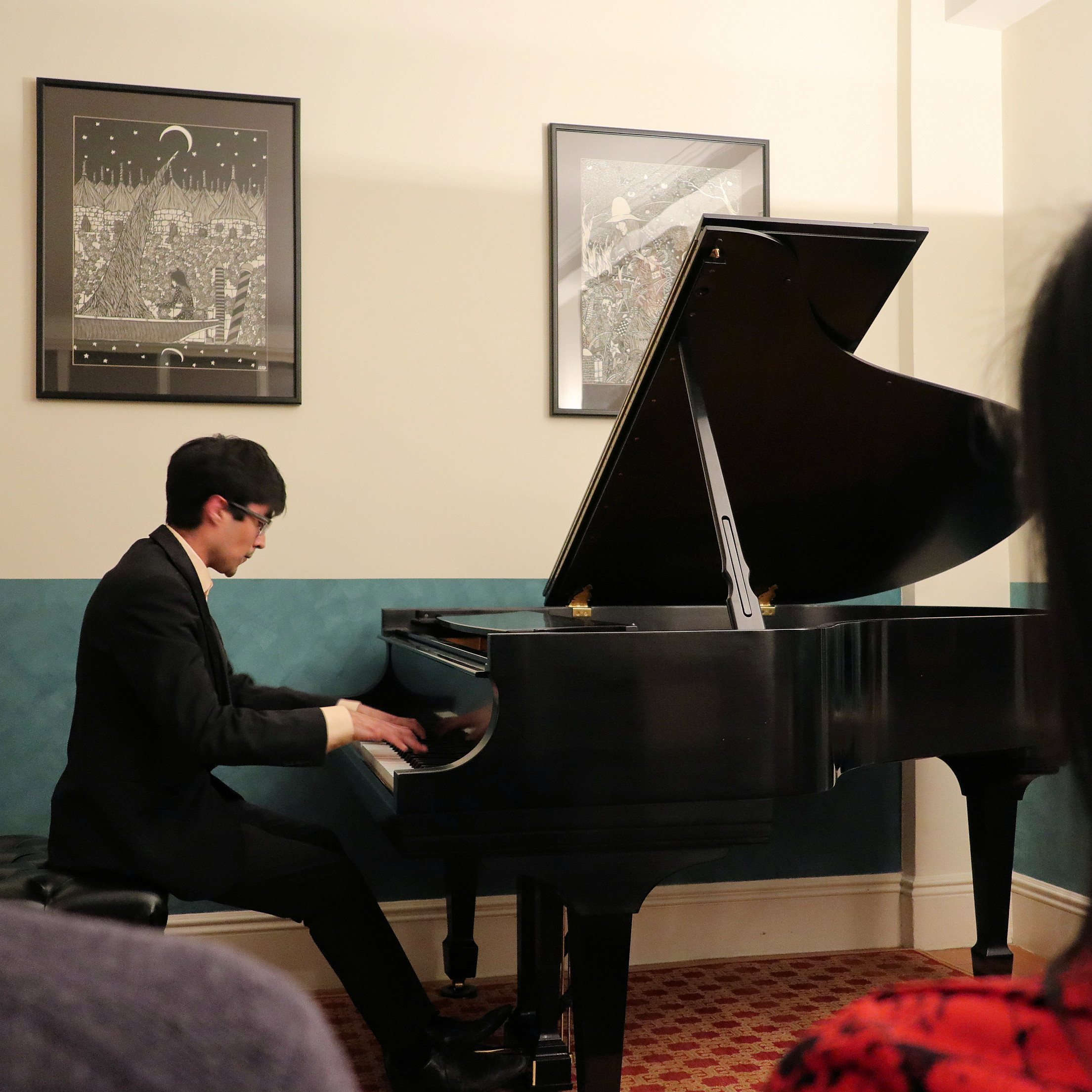
Gustavo Miranda-Bernales

Gustavo Miranda-Bernales plays Debussy

Debussy’s Feux d’Artifice (“fireworks”) is a swirling, percussive drama. Mr. Miranda-Bernales gave a clear, jagged rendition, climaxing with a gut-punch from the bottom A of the Shoemaker Steinway, followed by a searing glissando and then fading away over a distant thunder of rolling bass.

Published in 1913, the work now appears to herald the opening salvos of the First World War.

Debussy: Étude 7 pour les degrés chromatiques

Suejin Jung played this challenging étude with ease. Musically, it felt somewhat harsh and unrewarding, but as a technical exercise it was impressive.

Debussy: Préludes, Book 1

Suejin Jung played the following well-known preludes from Book 1. I particularly appreciated the first, Les sons et les parfums. Apropos of nothing, Les sons ends with the same bottom A that I mentioned in Mr. Bernales’ Feux d’Artifice.

  • Les sons et les parfums tournent dans l’air du soir
  • La sérénade interrompue
  • Ce qu’a vu le vent d’ouest

Franz Schubert: Fantasie in C major Op. 15 “Wanderer”

Schubert’s restless, charming Fantasie contains hints of the darker edge of his later sonatas. But even in Gustavo Miranda-Bernales’ commanding hands, it could not rise to the level of e.g. the great D 960 sonata in B flat Major.

Nevertheless, MIranda-Bernales’ compelling execution of this difficult work earned him raucus applause.

Frédéric Chopin: Sonata No. 3 in B minor

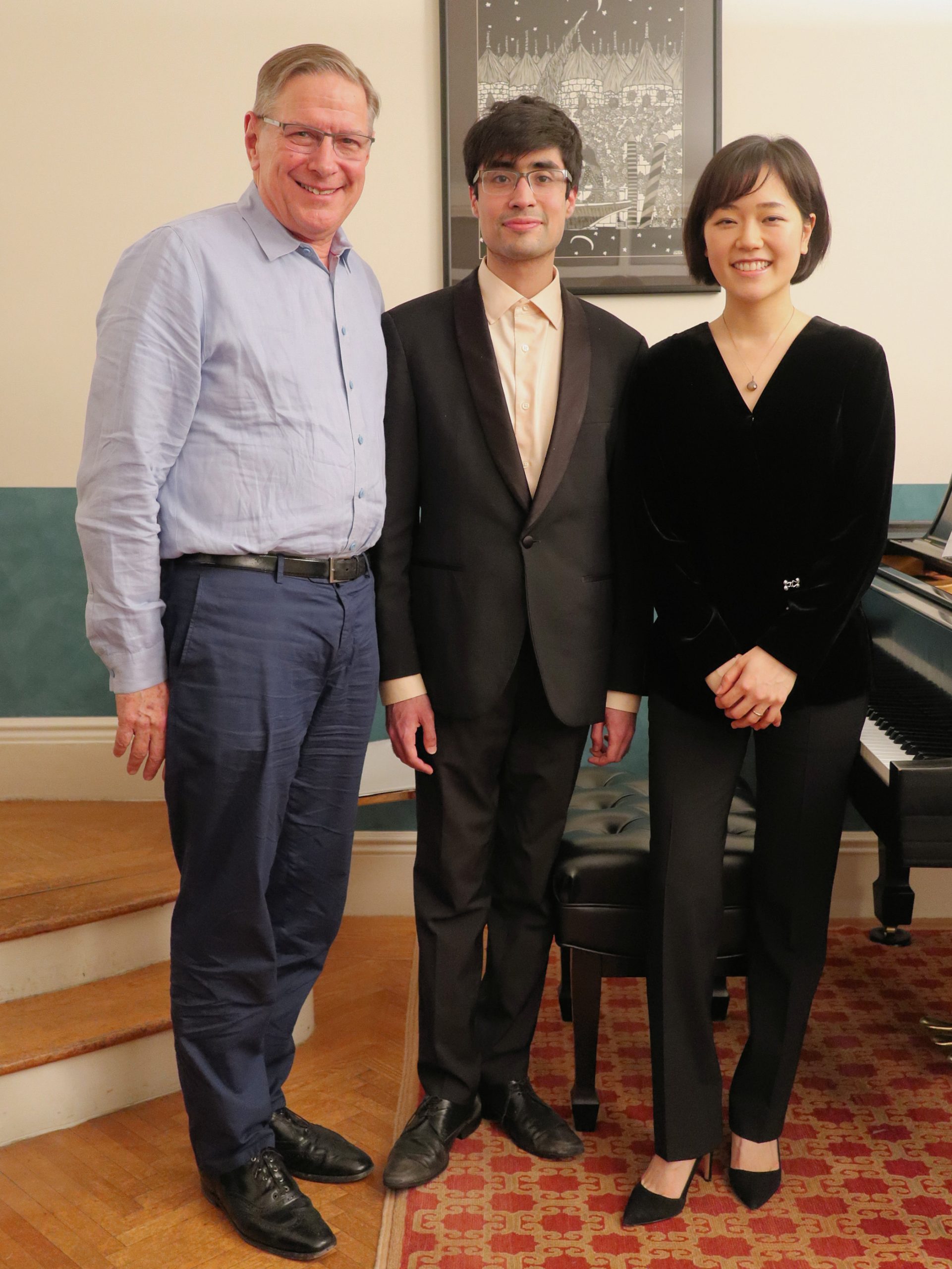
Robin Shoemaker, Gustavo Morales and Suejin Jung

Robin, Gustavo and Suejin

Chopin’s Piano Sonata No. 3 in B minor Op. 58 is like a tray of jewels spread in front of the listener. How can one describe such glittering beauty and magical craft?

I was struck by how balanced Suejin Jung’s presentation was. Each movement and every section felt not too hot and not too cold, but just right. Her Largo was exquisitely paced and luminous, Chopin at his most sublime.

And even the galloping Presto, which opens with weighty romanticism reminiscent of Schubert, was reined back sufficiently by Suejin that it morphed from manic to majestic.

For this reviewer, Suejin Jung’s Chopin was the highlight of the evening. It was still playing in my head on the long ride home.

Encore: Fauré Le Pas Espagnol

Le Pas Espagnol is the last section of Faure’s Dolly Suite for four-hand piano. For this rousing Spanish dance, the pianists sat together with Gustavo playing the primo (upper) part. It was a delightful way to close the evening, leaving everyone with a smile on their face.

Filed Under: Concerts, Private Concerts Tagged With: C Curtis Smith, Chopin, Chopin sonata no 3, Dolly Suite, Gabriel Fauré, Gustavo Miranda-Bernales, Ken Turner, le pas espagnol, Liszt, pianist, Robin Shoemaker, Schubert, Suejin Jung, Wanderer Fantasie

Next Page »

©2025 Ken Turner | Roving Pianist


Loading Comments...
 

You must be logged in to post a comment.