ROVING PIANIST

WHO KNOWS WHERE HE WILL SHOW UP NEXT?

  • Home
    • Register
    • Log In
  • Concerts
    • Public concerts
    • Private Concerts
  • Quick Takes
  • Piano Blog
  • Other
  • Contact
  • About
    • About The Author
    • Privacy Policy
You are here: Home / Archives for Piano Blog

Pianists with small hands

Saturday, June 25th, 2016 by Ken Turner

What does playing the piano do to your hands?

What playing the piano does to your hands

As a child I liked my small hands. They seemed appropriate for the son of writers. Marco Rubio‘s “if your hands are small we all know what else is small” exchange with Donald Trump was decades away.

Delicate hands

My mother told that me I had delicate hands. This became a metaphor for my life. Early in my career I had to fire someone. I could not do it, so I sat in my boss’s office to learn from a man with larger hands. But when he spoke to the employee, he stumbled verbally. He was as sensitive as I, large hands notwithstanding.

Large Hands, Small Hands

If having big hands doesn’t make life easier, then having small hands shouldn’t make it more difficult. Or so I thought, until I took up learning the piano. I was half a century past the age when our hands are pliable enough to adapt physically to the instrument.

Rachmaninov, Liszt

At my first piano lesson, I could with forethought play an octave (an eight-note spread). A ninth was uncomfortable and a tenth impossible. I bought the scores of my favorite Rachmaninov piano preludes, but they contained chords that were too wide for my small hands. My dreams were shattered: I would never be able to wrap my fingers round the works of large-handed composers such as Liszt and Rachmaninov.

Virtual Hands

My teacher’s hands are tiny and yet she is a concert pianist, so I asked her about those tenths, those 6-note chords and those unreachable arpeggios. I learned that what is written may not be what is played, and the audience may not notice or may not care. You can omit a note from a chord. You can break or arpeggiate a chord to reach unreachable notes. Such techniques create the illusion that you have played what you cannot play, making your virtual hand larger than your real one.

Sleight Of Hand

It is one thing to be aware of such techniques, and quite another to brave a piece that requires sleight of hand. But I am becoming aware, as my second year as an adult beginner pianist comes to a close, that something has happened to my hands. Those octaves are now easy, and a 9-note spread such as those in Beethoven’s Moonlight first movement no longer leaves my right hand hurting for days. Rachmaninov remains a challenge, but ever since I saw this exquisite performance by Marijan Djuzel I have had my eye on Rachmaninov’s Prelude Opus 23 No. 10 (watch this video, it’s impressive).

Does playing the piano change your hands?

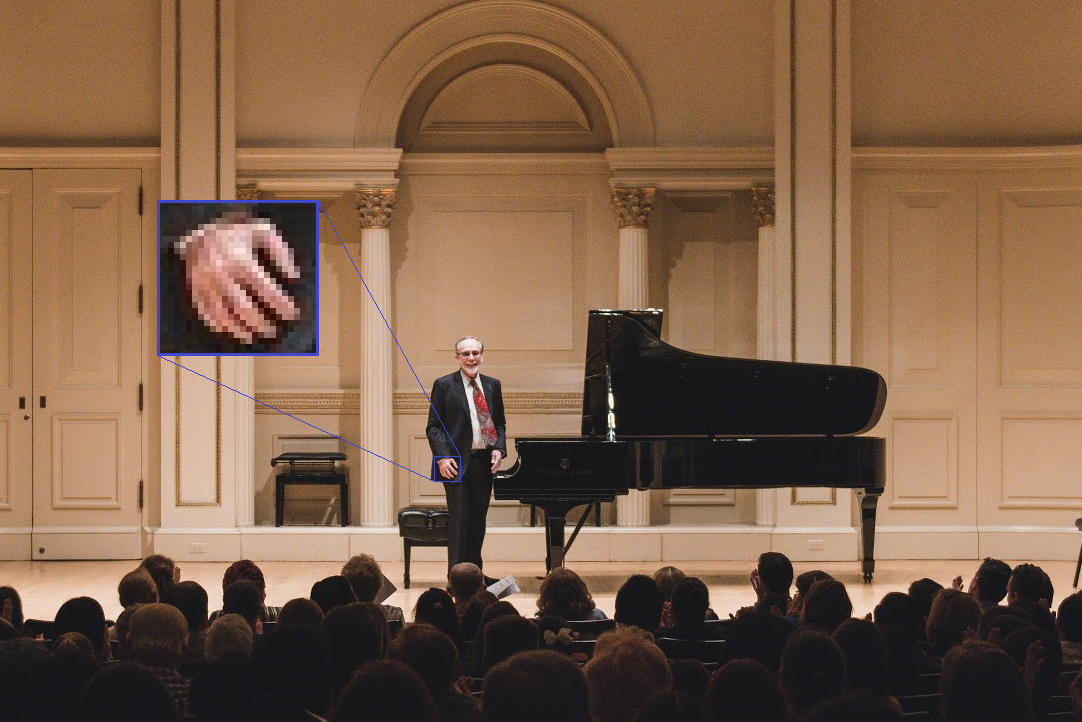
A couple of weeks ago I got to play Chopin in New York. In a photograph taken at the time, I noticed that my right hand looks different. This might just be an illusion caused by loose, warmed-up hands, but I prefer to see it as a Lamarckian response to the demands of the piano. My hands appear to have gotten larger.
Filed Under: Adult Beginner Pianist, Favorites, Piano Blog Tagged With: Carnegie Hall, Donald Trump, Marco Rubio, Marijan Djuzel, pianist, Rachmaninov, small hands

Igudesman and Joo

Saturday, January 16th, 2016 by Ken Turner

Igudesman and Joo

Igudesman and Joo

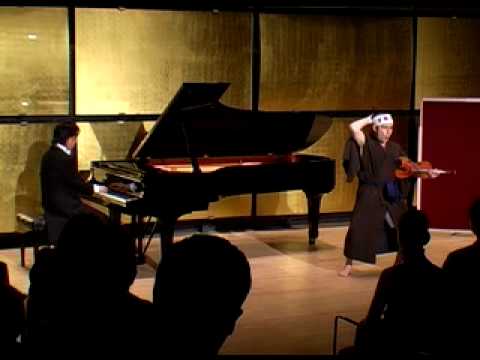
Igudesman & Joo (Alek­sey Igudes­man and Hyung-ki Joo) look like the unlikeliest duo, which fits their genre of comedy well.

Mr. Joo is British-Korean, and Mr. Igudesman is from Russia. They  first met in the 1970’s at the Yehudi Menuhin School in England.

A Little Nightmare in Music

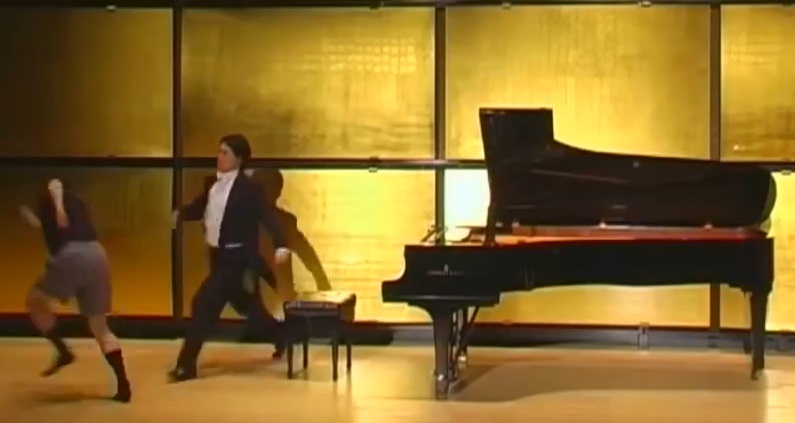
The contrast between the tall Korean pianist and the short Russian violinist sets the tone for Igudesman and Joo’s breakout show “A Little Nightmare in Music”.  The physical differences between the men reminds me of Laurel and Hardy, as does some of their combative slapstick. Steinway & Sons must have a great sense of humor!

Igudesman and Joo are classically trained

Although Igudesman and Joo are skilled, classically trained musicians, you don’t have to be a classical music buff to enjoy their material. There are no “in” jokes that only musicians would understand.  The music that they play during their skits is well-known enough that they will be familiar to you regardless of whether you know who wrote them or what they are called. They also use some more popular material.

Best Musician Comedy since Victor Borge?

I won’t tell you any more about the show because I don’t want to spoil it for you. Suffice it to say that I haven’t laughed this much at a classically-trained musician turned comedian since I heard Victor Borge do “Phonetic Punctuation”.

https://youtu.be/Qf_TDuhk3No

Check http://www.igudesmanandjoo.com for upcoming shows.

Filed Under: Piano Blog Tagged With: classical music, comedy, Hyung-ki Joo;, Igoodsman and Joo, Laurel and Hardy, Steinway & Sons, victor borge

Tempo Rubato

Sunday, September 20th, 2015 by Ken Turner

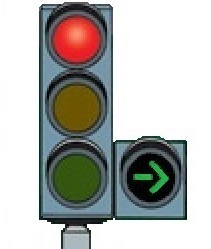
Red light with green filterDrivers slip into the Exit Only lane to get past traffic at a red light. When the light changes, they do not exit. Instead they cut in ahead of the rest of the traffic. The time they save is stolen time – tempo rubato.

Those who cut ahead of us on the highway, at the store, at the bus stop, may be your neighbor, my child, anyone. They get to their destination faster, by delaying those whom they pass. I doubt that they consider themselves thieves, but they steal.

In music, rubato takes various forms. You can hold back for just a moment. You can speed and slow over several bars. In Armenian composer Khachaturian’s piano concerto, a conductor can use rubato to make the entire work heave like a vessel in heavy seas.

At the piano, rubato can be like traffic on a multi-lane highway. One hand maintains the tempo while the other speeds and slows, but never breaks entirely free from the flow. Time is not stolen, it is borrowed and returned.

One time I was running late driving to my piano lesson. Never mind that my tutor might also be behind schedule: I did not want miss a moment. I like to get to music school early to inhale the ambience and ogle the Steinways. And it is oddly soothing after a draining day at work, to exchange a nod and a smile with parents waiting for their kids, those same parents who are there at the same time every week, waiting for the same kids.

When I got to Rubato Red traffic light, the Exit Only lane was open. Like those rats who cut me off every day, I took it. When the light turned green I unleashed 450 ft/lbs of gut-wrenching BMW diesel torque and reclaimed 20 seconds of my life, proceeding stretto to class.

Filed Under: Piano Blog Tagged With: BMW, Khachaturian, pianist, piano, rubato, tempo rubato, time

« Previous Page
Next Page »

©2025 Ken Turner | Roving Pianist


Loading Comments...
 

You must be logged in to post a comment.