ROVING PIANIST

WHO KNOWS WHERE HE WILL SHOW UP NEXT?

  • Home
    • Register
    • Log In
  • Concerts
    • Public concerts
    • Private Concerts
  • Quick Takes
  • Piano Blog
  • Other
  • Contact
  • About
    • About The Author
    • Privacy Policy
You are here: Home / Archives for Concerts / Private Concerts

Elegant Piano by Richarlita You in NYC

Wednesday, November 19th, 2025 by Ken Turner

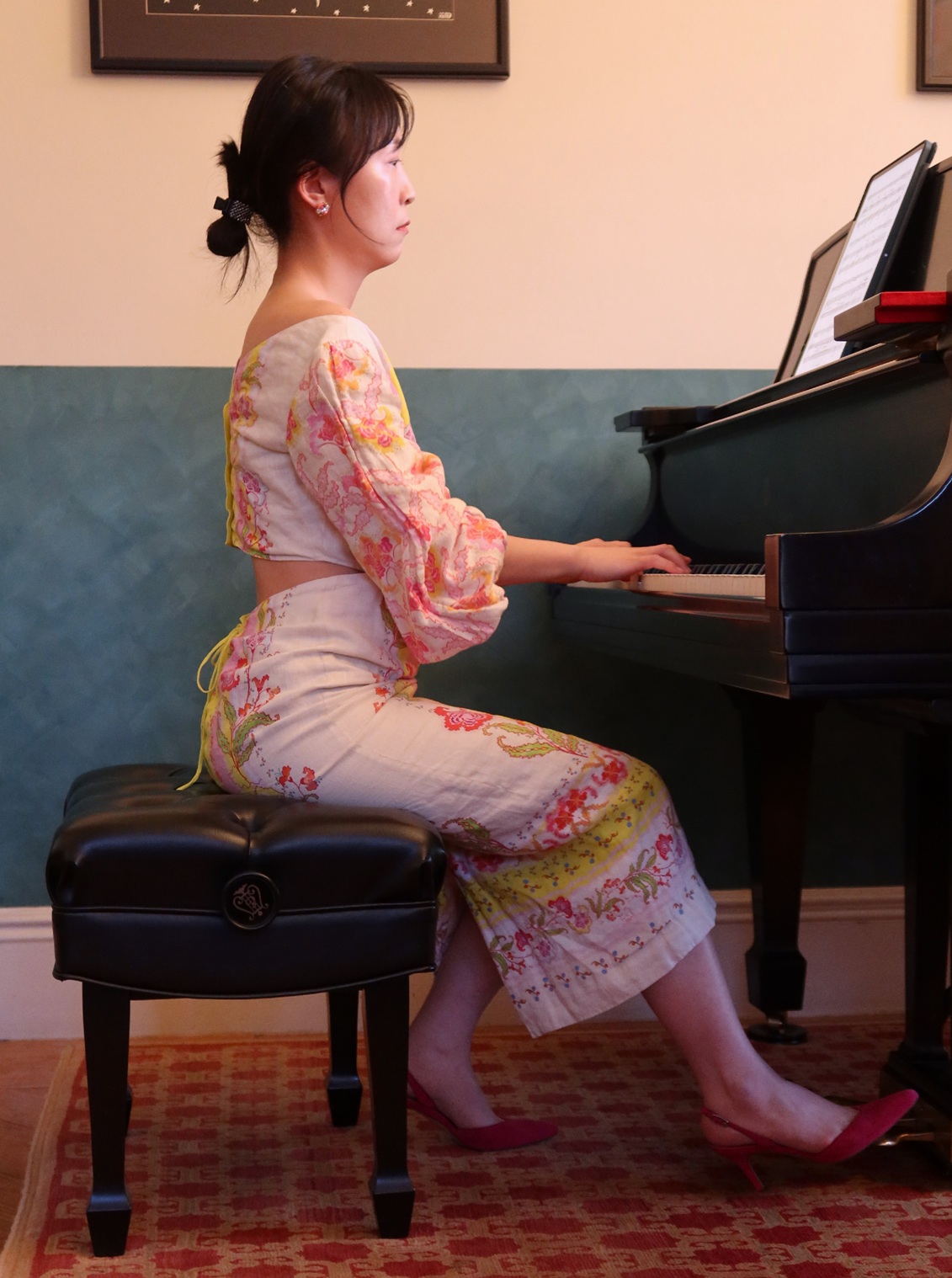
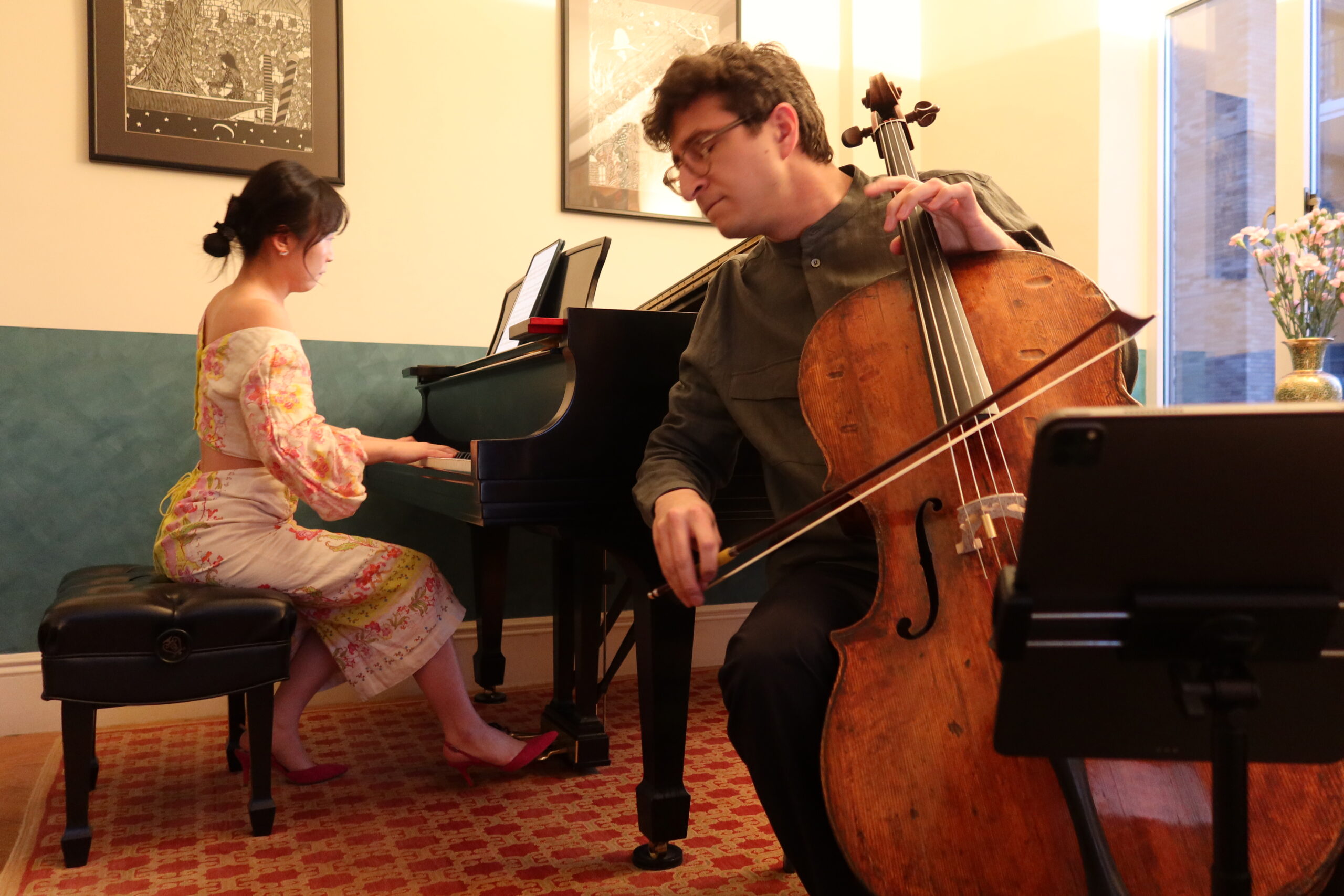
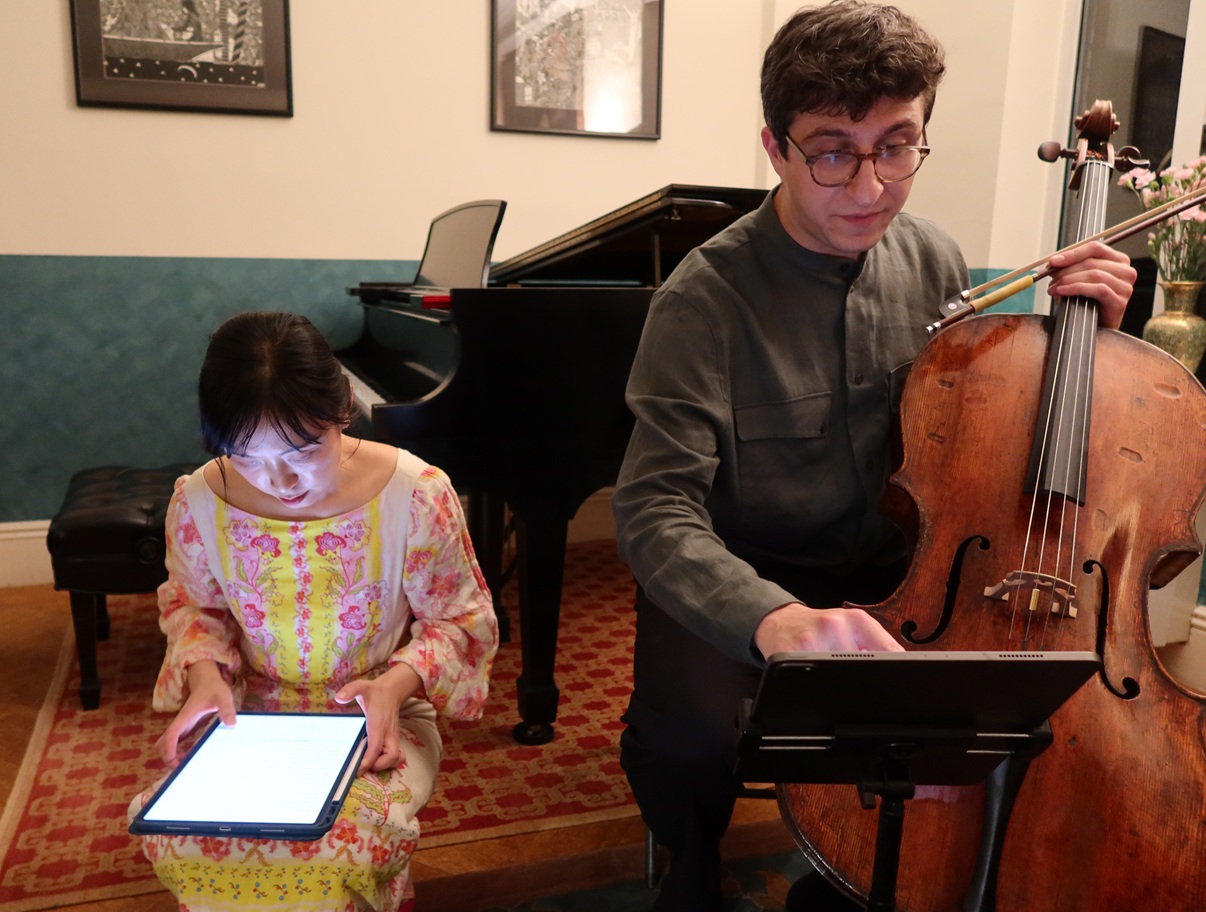
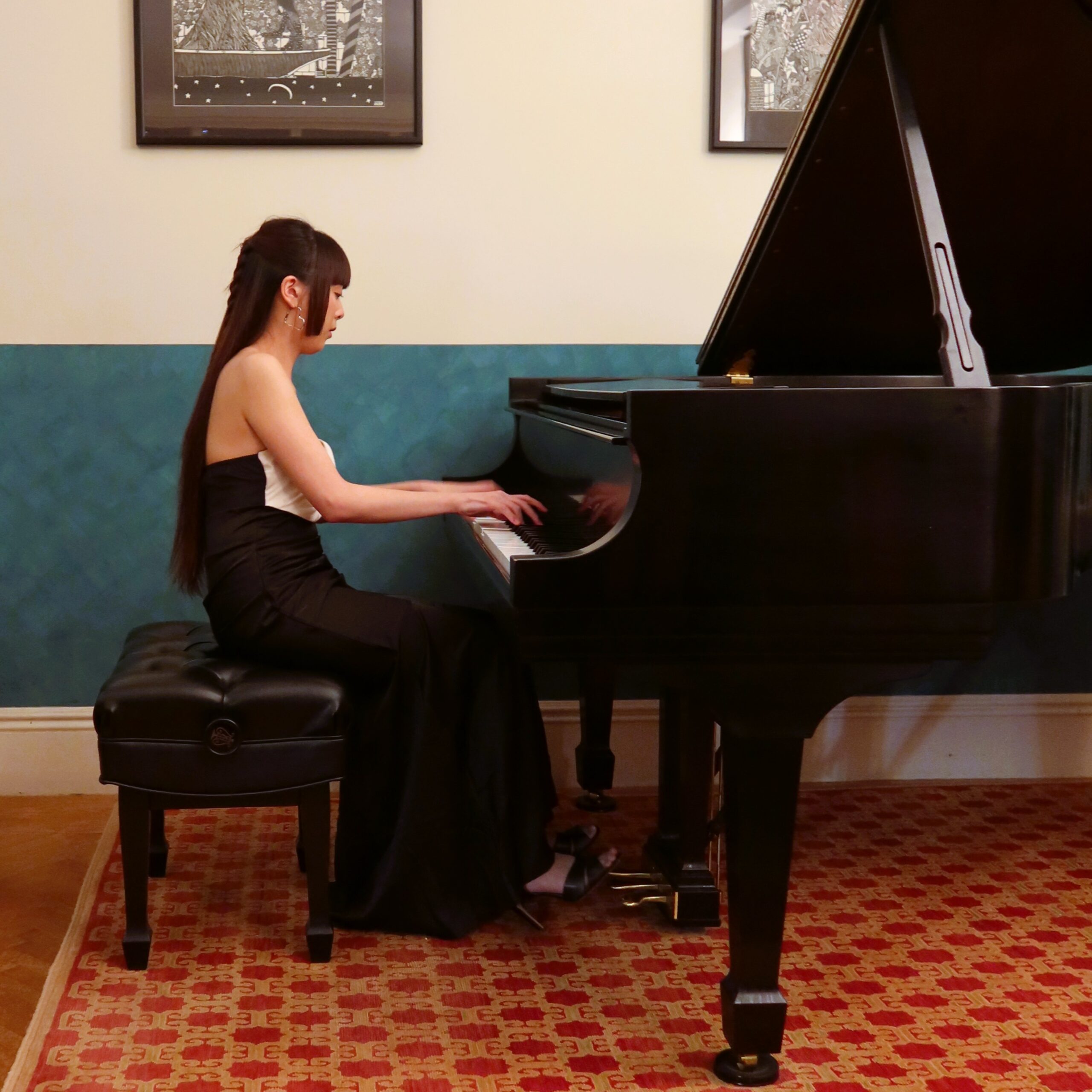
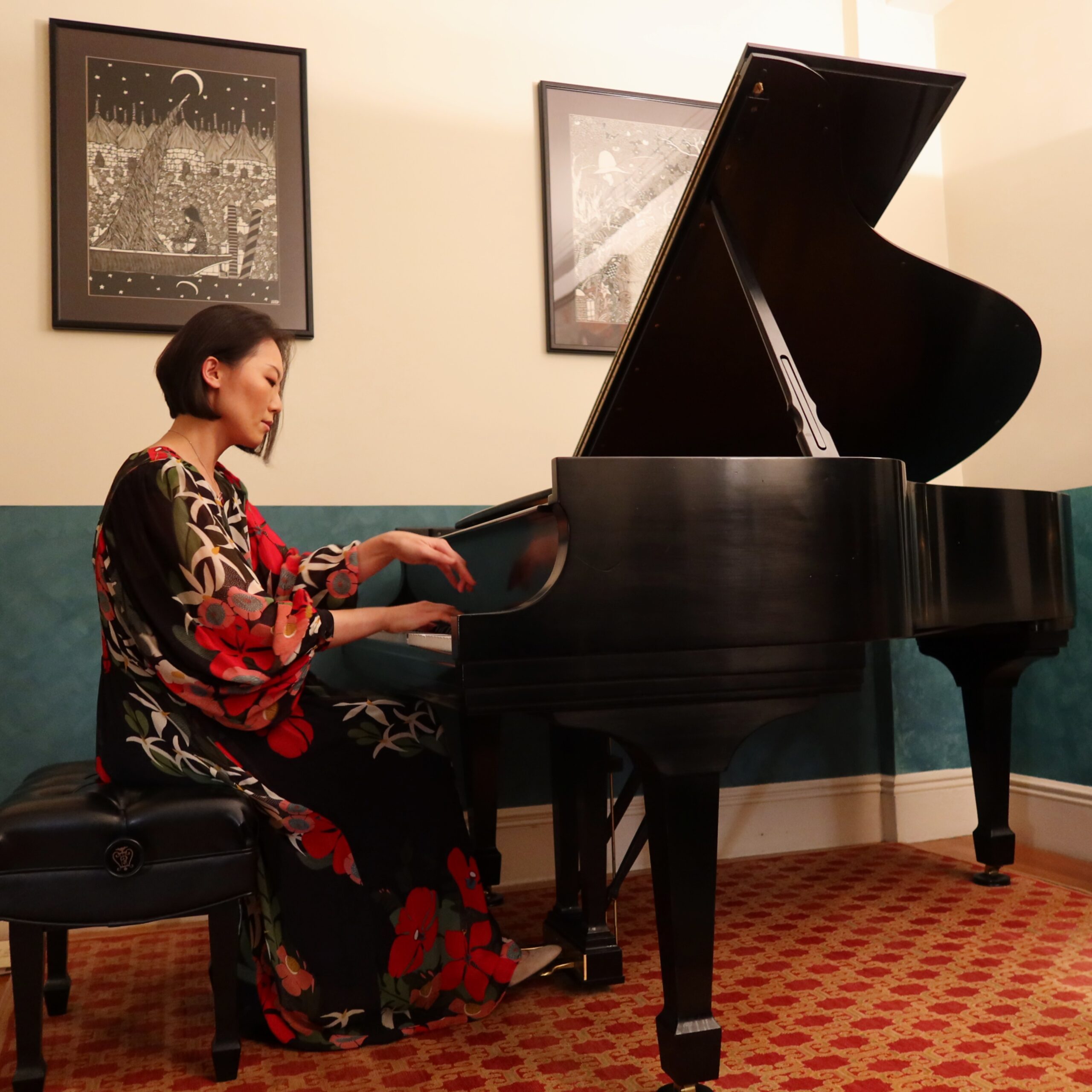
Richarlita You at Central Park West

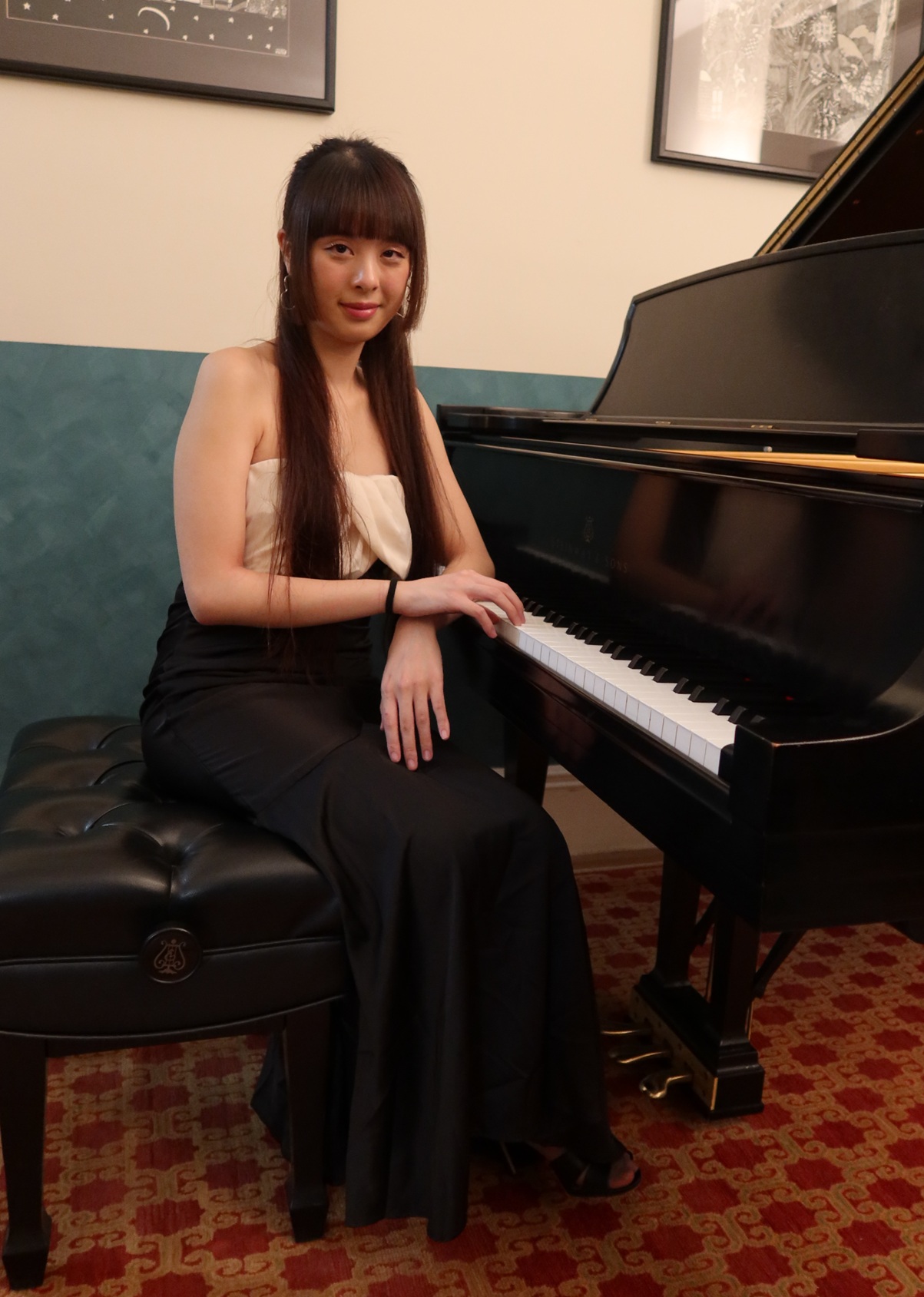
Richarlita You

On Saturday November 15th, 2025, I attended Richarlita You‘s recital at Robin Shoemaker’s salon on Central Park West, New York.

Richarlita You is currently returning to the stage after a two-year hiatus. Her repertoire for this concert was more a musical biography than a typical concert program. Each work represented a segment of her journey from childhood in Taiwan to life in the United States.

Schubert Impromptu B-flag major D.935 No. 3

Ms. You opened with Schubert’s delicate, wistful B-flat Impromptu. She described it as a reflection of her childhood, and of the moment she committed to becoming a pianist. I thought I recognized that moment in the sober, almost somber close of this otherwise uplifting work.

Liszt: La Campanella

Liszt’s notorious étude followed. While there was some tension in the delivery, it was vigorous and entertaining. I particularly enjoyed watching the pianist’s repeated-note technique from my front-row vantage point.

Scriabin: Sonata No. 2 in G# minor Op. 19 “Sonate-Fantasie”

The emotional center of Richarlita’s program began with Scriabin’s Sonata. In it she recognized echoes of her early years after crossing the ocean to the United States, finding a “path that we shared” in Scriabin’s oceanic composition. Her interpretation was heartfelt and evocative.

Richarlita You

Debussy: Clair de Lune

For Richarlita You, this work is a personal refuge. During her challenging early months at Juilliard, Spotify serendipitously selected Debussy’s Clair de Lune for her while she walked around Lincoln Center under a full moon. Her luminous performance carried that sense of serenity.

Brahms: Intermezzo in A major Op. 118 No. 2

Introducing Brahms as her favorite composer, Richarlita You mentioned the poignant story of Brahms’ love for Clara Schumann. The Intermezzo in A major Op. 118 No. 2 was Richarlita’s way of inviting us all to take a moment to think about the people that we love, and to cherish the precious relationships that we have with our loved ones.

True to the composer’s Andante teneramente (tender) marking, Richarlita’s Intermezzo wrapped us in warm, melancholic beauty.

Chi-Lien Hung: Memories (from Five Pieces for Pianoforte)

Richarlita You found  Chi-Lien Hung’s Memories in a bookstore by accident. The score reminded her of her home town and the land she grew up in  (Taiwan). This light, reflective pentatonic gem had an authentic Chinese feel.

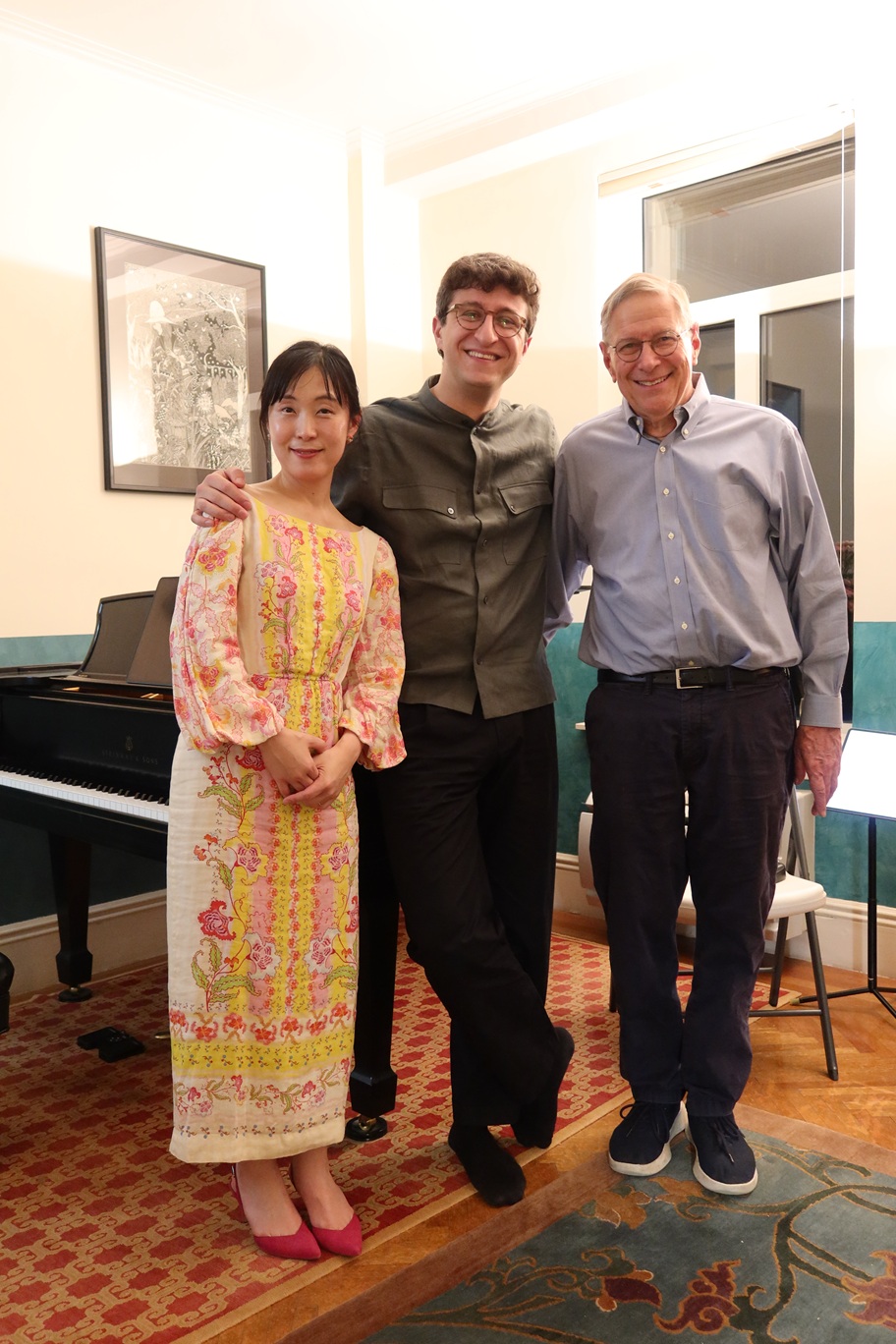
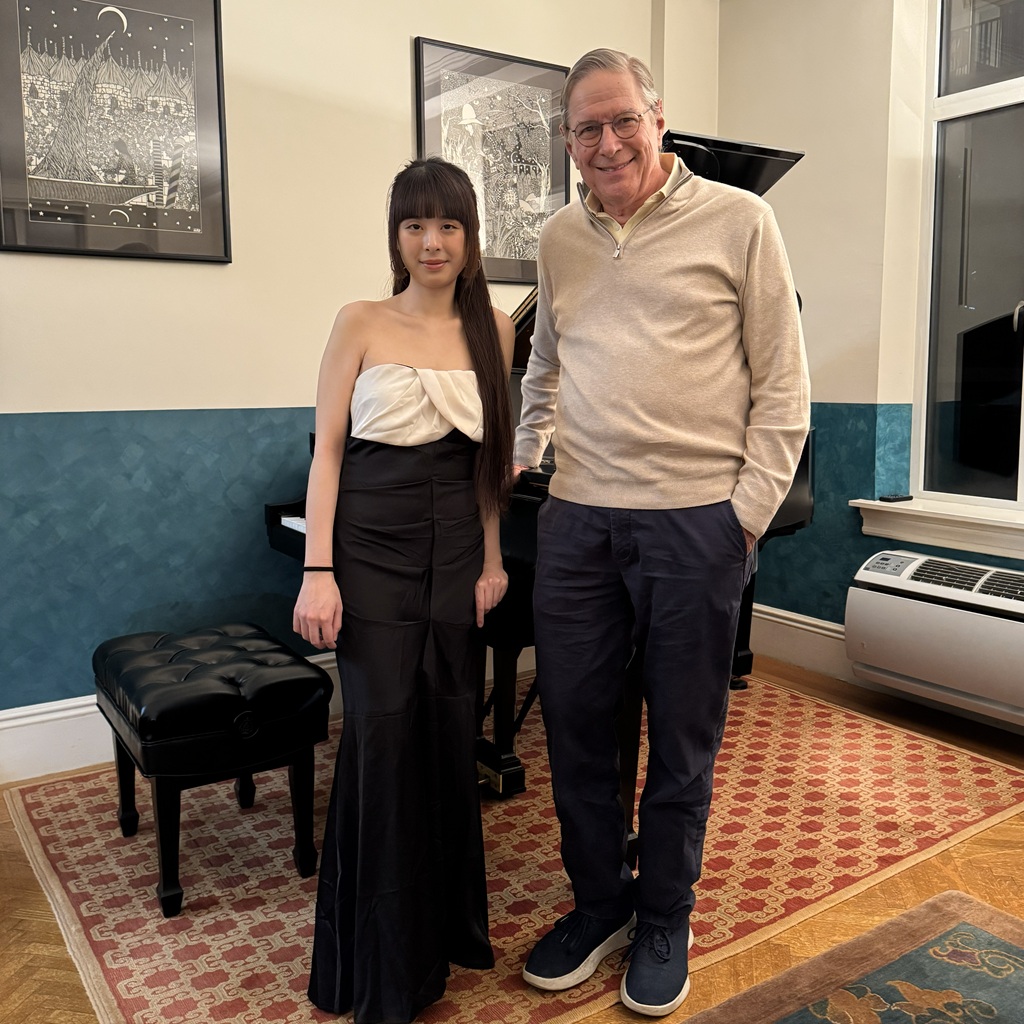
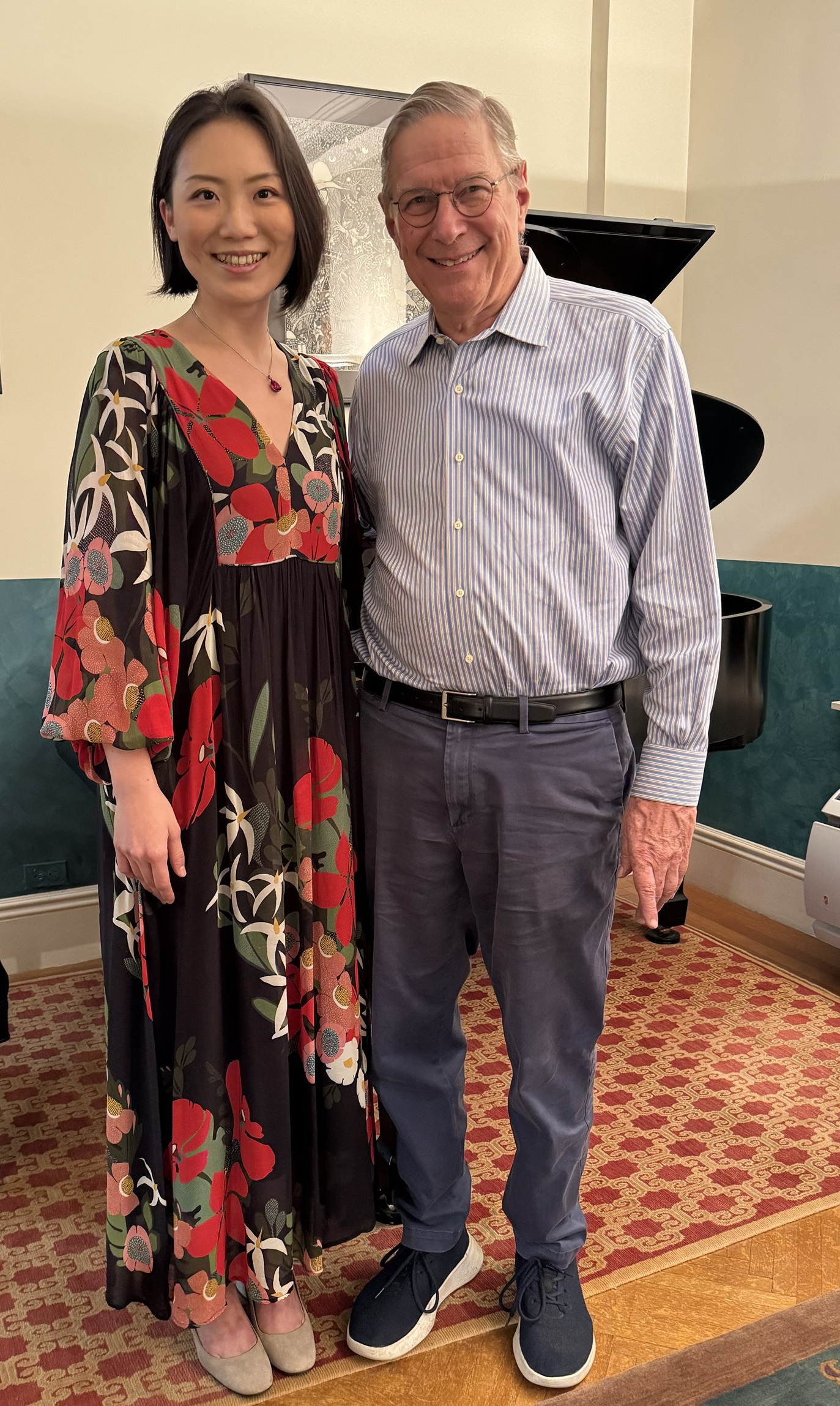
Richarlita You with Robin Shoemaker

Balakirev: Islamey “Fantasie orientale”

Balakirev’s Islamey is a notoriously difficult work. The composer himself acknowledged that he couldn’t play some parts of it. Originally written in 1869, Balakirev revised it in 1902, adding alternative passages (ossias).

This was Richarlita You’s debut performance of Islamey, a bold way indeed to mark her return to public performance. Aside from the difficulty, this was a musically interesting experience. It is based on folk music from the Caucasus in Russia, giving it a certain brooding Russian taste.

Final Thoughts

Richarlita You’s recital was a brief musical autobiography, presented with elegance and considerable skill. The program’s personal thread was fascinating, and the intimate salon setting made the experience all the richer.

For those who missed this performance, the same repertoire is listed for her Groupmuse recital scheduled for Saturday January 17th, 2026.


Filed Under: Concerts, Private Concerts Tagged With: Balakirev, Brahms, Brahms Intermezzo, Chi-lien Hung, Clair de Lune, Debussy, Islamey, Richarlita You, Robin Shoemaker, Schubert, Schubert Impromptu, Scriabin, Xin-Hua Richarlita You

Flutist Ginevra Petrucci and Pianist Matthieu Cognet in NYC

Thursday, March 6th, 2025 by Ken Turner

Petrucci and the Golden Flute

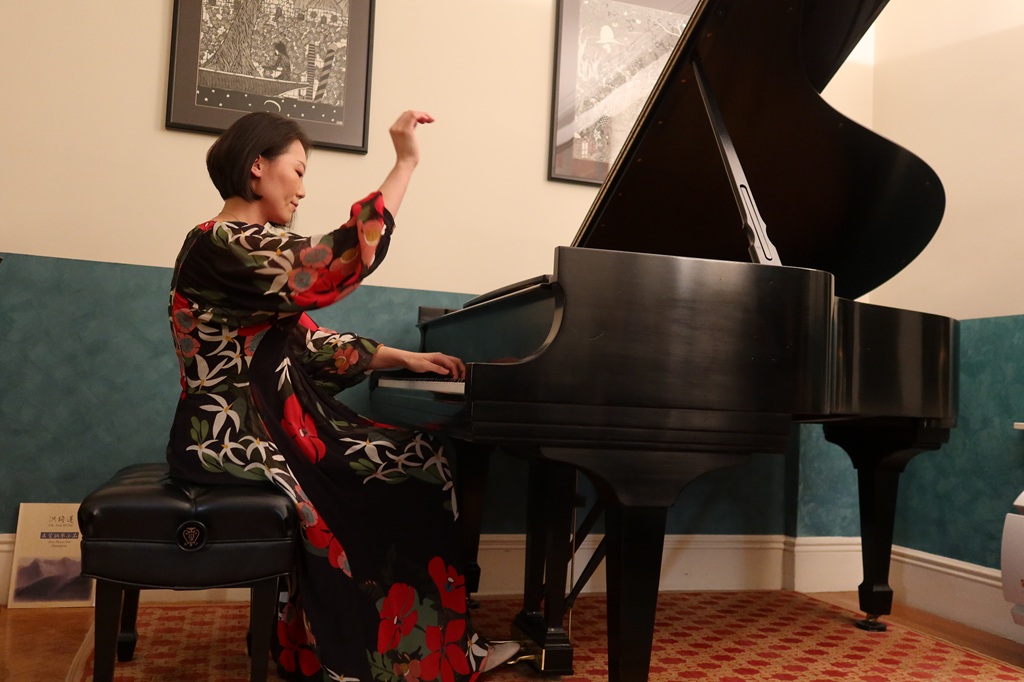
Ginevra Petrucci performing in New York, March 2025

On March 2nd, 2025, I was privileged to attend the Shoemaker Salon for an all-French recital by Italian flutist Ginevra Petrucci and French pianist Matthieu Cognet. I was accompanied by flutist Emily Piccola, who provided insights for this article.

The Program

The sonatas being performed were written for violin. The first (Fauré) was completed in 1876, while the second (Franck) was written in 1886. Both composers are considered to be late Romantic era, and both works feel quintessentially French.

Gabriel Fauré Sonata No.1 in A Major Op. 13

Fauré’s Sonata opened with a rolling piano introduction, evolving into flowing repartee between piano and flute. The piano would lead and the flute repeat, or the flute would lead and the piano echo and ornament.

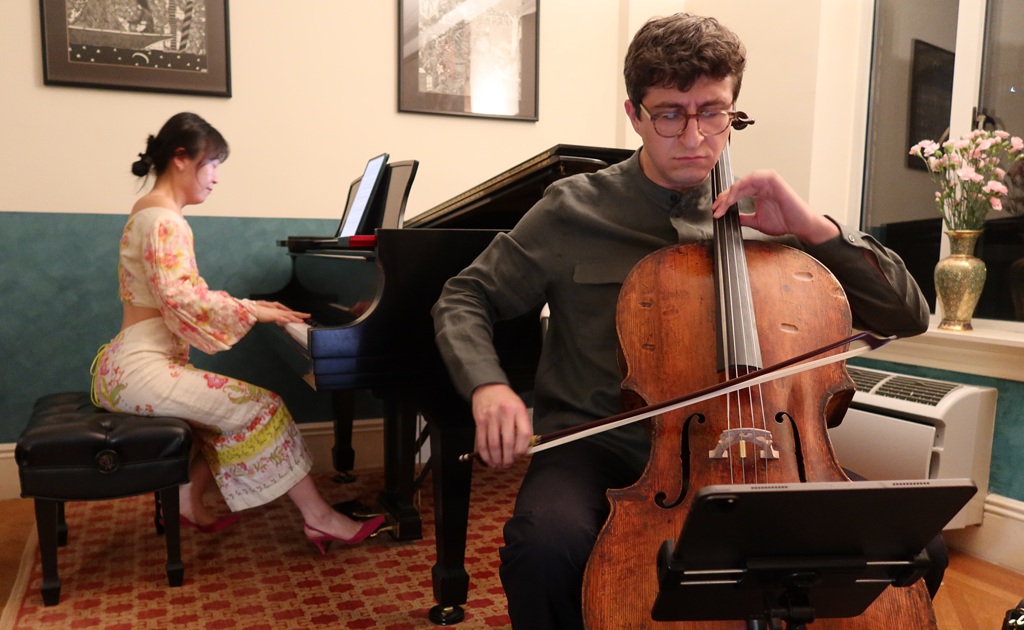
Ginevra Petrucci (flute) and Matthieu Cognet (piano) in NYC

Audience view

The second movement (Andante) began with somber D minor piano in the rhythm of a Barcarolle. The flute started low and fluid, perhaps suggesting the singing of a Venetian gondolier. Finally like sun breaking through clouds, the movement closed in D major.

A short Scherzo followed, opening with fast staccato. Again the flute and piano would echo each other. A softer middle section transitioned back to the staccato of the opening, leading to a playful finish.

The last movement (Finale) opened with a haunting flute melody. This was partnered with the clearest, most singing piano we had heard so far. I loved how the musicians passed leadership back and forth during the interplay of their instruments. We noted use of the flute’s high register for emotional tension, a technique employed by Fauré in other works. The work closed with a brief, satisfyingly virtuosic coda.

César Franck Sonata in A Major

Franck’s Violin Sonata in A Major was written as a gift to Belgian violinist Eugène Ysaÿe. It has been transcribed for various instruments, including the flute. However for this concert, flutist Ginevra Petrucci played directly from the violin part.

The piano opened with a gentle, reflective theme. The flute entered and danced over the piano like a ballerina. As the movement progressed, the instruments ebbed and flowed around each other with grace and serenity.

Unsung hero pianist Matthieu Cognet

Pianist Matthieu Cognet NYC 2025

In contrast, the second movement (Allegro) opened with dark, ominous piano. The flute followed, the instruments swirling around each other. A slower mid-section reduced the tension briefly. The movement ended with a brooding climb to a clattering climax.

The third movement (Ben moderato) followed attacca (immediately) with mournful piano and bird-like flute. There were hints of earlier movements, and of the upcoming finale. The movement closed wistfully with low flute over muted piano arpeggios.

The final movement opens with the famous A major theme that we had been waiting for, played canonically by each instrument. A winding series of crescendos lead to further canonical iterations before the work closed triumphantly.

Gabriel Fauré: Morceau de Concours (encore)

This beautiful, deceptively simple work made for an excellent close to the concert. It felt like a slow walk through a Monet painting, where the piano provided the footsteps and the flute was the afternoon breeze. The piano part is relatively subdued, but I was impressed by Mr. Cognet’s refined dynamics and his unexpected but effective accentuation of A3 in two places.

A Flutist’s Perspective

It can be hard to get good sound out of the lower range of a flute, and to play quietly in the high end. My flutist companion was in awe of Ms. Petrucci’s ability to project low notes loud and clear, and high notes so quietly. She admired her clean articulation and loved her vibrato.

For Franck’s sonata, Ms. Petrucci made adjustments to accommodate variances between violin and flute. Most obviously, the violin can play two notes concurrently (double stop), whereas the flute cannot. Also the range of the violin extends lower than that of the flute, necessitating octave changes or other adaptations.

Host Robin (center) with Matthieu and Ginevra

Closing Thoughts

Ginevra Petrucci and Matthieu Cognet played in perfect synchronization. When they shared the same melodic line, they sounded like one instrument. This allowed the refined elegance of these delectably French works to shine.

While we tend to focus on the flutist standing up front, the piano is an integral and essential partner in these sonatas. Mr. Cognet performed with admirable selflessness, seamlessly coordinating with the flutist while keeping a low profile to ensure that the audience was immersed in the musical flow.

Finally we note that we were listening to a solid 14k gold flute. Such instruments are prized for their rich tone, which Ms.  Petrucci took full advantage of.

Filed Under: Concerts, Private Concerts Tagged With: Cesar Franck, Flute, Gabriel Fauré, Ginevra Petrucci, Matthieu cognet, Robin Shoemaker

Han Chen plays Anton Rubinstein in NYC

Monday, November 25th, 2024 by Ken Turner

Han Chen plays Anton Rubinstein

Han Chen, November 23rd 2024

I was excited to attend pianist Han Chen’s recital at Central Park West on November 23rd, 2024, hosted by Robin Shoemaker. I had greatly enjoyed previous recitals by Mr. Chen at this venue in 2017 and 2018.

The program consisted of romantic era piano sonatas by Anton Rubinstein.  In his introduction, Han Chen explained that the concert was in preparation for his upcoming Rubinstein recording sessions for the NAXOS label.

I used to wonder why a fine pianist like Rubinstein composed such quirky music. Only when researching before the recital did I realize that Arthur Rubinstein (1887-1982) was not Anton Rubinstein (1829-1894)!

Rubinstein: Piano Sonata No. 3 in F major, Op. 41 (1855)

Han Chen’s expressive delivery left no doubt that he “got” Rubinstein. But despite Mr. Chen’s intense focus, Sonata No. 3 itself felt in need of refinement. Only in the final Allegro Vivace did I sense that the composer had potential.

Rubinstein: Piano Sonata No. 4 in A minor, Op. 100 (1877)

The first movement (moderato con moto) opened with great drama and evolved through abrupt changes of mood. My overall impression was positive, and I loved Han Chen’s closing low-end flourishes.

The second movement (allegro vivace) was laced with humor and delivered with such relish by Han Chen that it was hard not to chuckle. Certain moments reminded me of Mussorgsky’s Pictures at an Exhibition, written a few years earlier. Also of note were some transitions that sounded very much like Rachmaninoff.

The third movement (andante) opened with almost Schubertian flow, progressing through passages that could have been attributed to several composers of the era. And wait… was that a not-so-subtle echo of Chopin’s Marche Funèbre? Again I noticed motifs that were suggestive of future works by Rachmaninoff.

Han Chen

Hen Chen enjoys his audience

The final movement (allegro assai) opened with declamatory drama, progressing through ethereal moments to much pounding. This was impressive to watch but somewhat overwhelming to listen to. The final couple of minutes flirted with melody before launching into a robust, almost Liszt-ian finale.

Han Chen pulled this difficult work together with power and verve. One can only wonder what it must have been like to see Anton Rubinstein himself perform it.

Rachmaninoff – Moments Musicaux in E minor Op. 16 No. 4 (1896)

After an evening of Rubinstein works that hinted at Rachmaninoff, Han Chen’s choice of a Rachmaninoff encore was fitting and made for a satisfying close to a fascinating evening.

Han Chen with Robin Shoemaker

Han Chen and Robin Shoemaker

A few words with Han Chen

I asked Han Chen about the huge difference between the sonatas. He explained that Sonata No. 3 was written while the composer was in his 20’s, while No. 4 was written over 20 years later.

As a takeaway, Han Chen suggested that people pay more attention to less well-known composers. Just as great composers can write poor works, lesser composers can produce great works. He felt that Rubinstein’s Sonata No. 4 was such a work.

CLICK HERE to support Han Chen’s new Rubinstein CD!


Filed Under: Concerts, Private Concerts Tagged With: anton rubenstein, Arthur Rubenstein, Chopin, Han Chen, moments musicaux, Mussorgsky, NAXOS, rachmaninoff, Robin Shoemaker

Next Page »

©2025 Ken Turner | Roving Pianist


Loading Comments...
 

You must be logged in to post a comment.